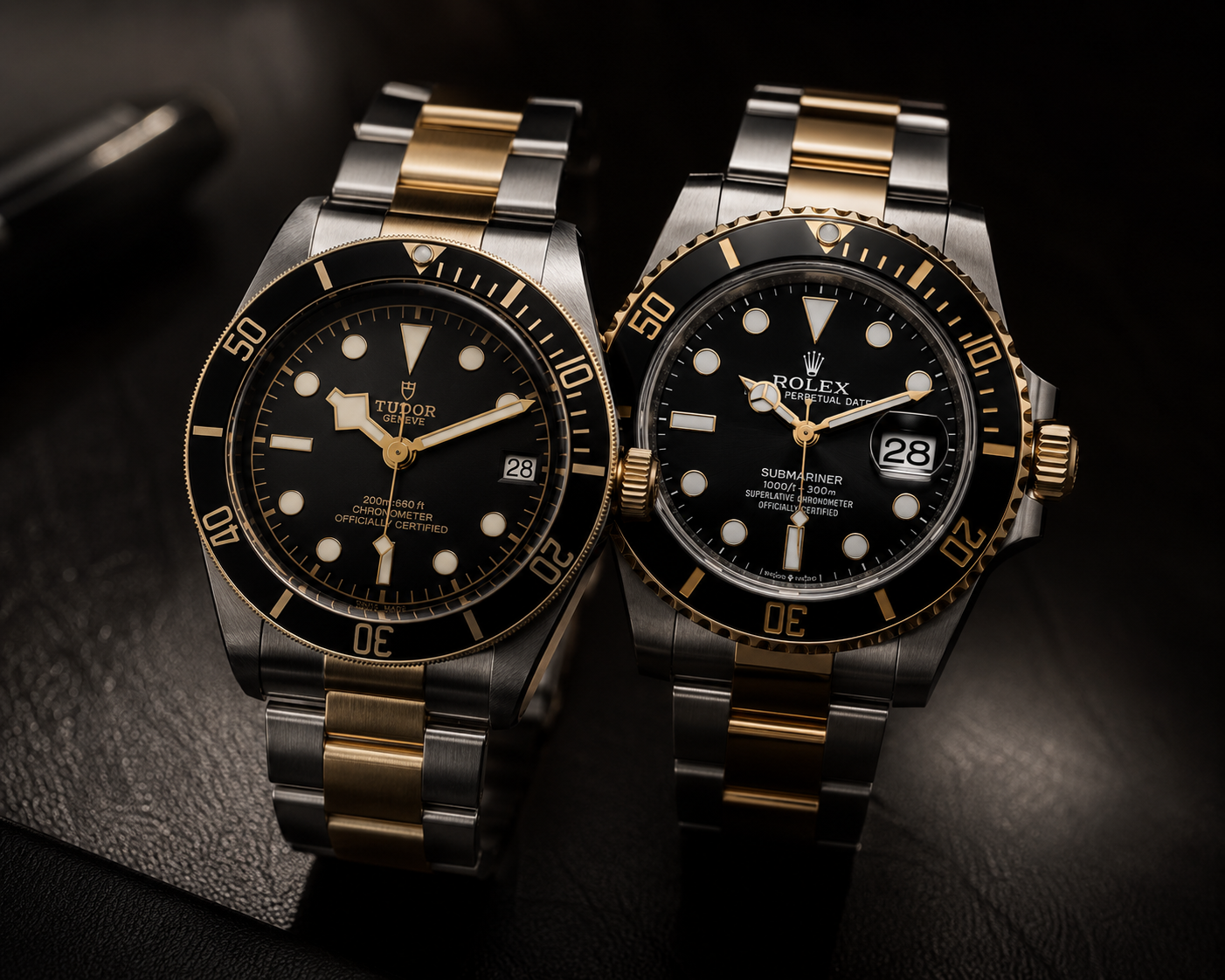
Tudor Black Bay 58 vs Rolex Submariner: Which Should You Buy?
It is the most litigated question in accessible luxury watchmaking, and one I have lived on both sides of. I have worn the Tudor Black Bay 58 daily for two years before adding a Submariner, and the answer is not what most retail-side commentary suggests. Framed correctly, this is not a debate about taste; it is a capital allocation decision with a specific signal payoff and a measurable depreciation curve. Both watches deserve to be evaluated as financial instruments first and design objects second.
The Case For the Tudor Black Bay 58
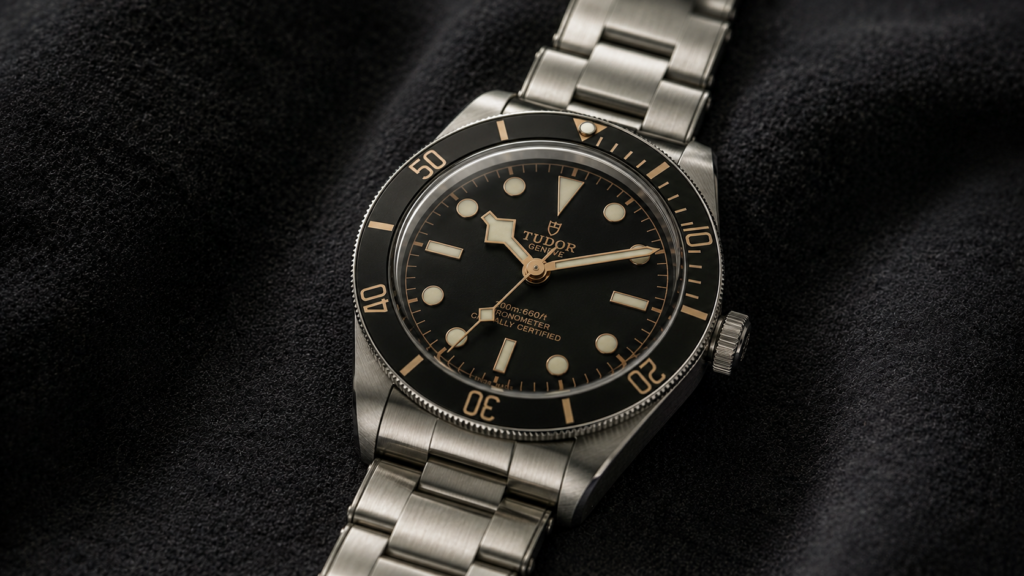
The Black Bay 58 is the most intellectually honest dive watch on the market. At £3,050 to £3,350 retail for the reference 79030N in stainless steel, it occupies a price band where the competition is almost entirely composed of fashion-positioned brands that cannot match its mechanical credibility.
The 39mm case, sized after the 1958 Tudor diving reference, is the central design decision. Modern dive watches drifted to 42mm and 44mm over the past two decades; the BB58 reverted to vintage proportions and was vindicated by the market. On a suited wrist of average size, it sits cleanly under a shirt cuff. It is a watch that flatters rather than dominates.
The MT5402 movement is in-house, COSC chronometer certified, and offers a 70-hour power reserve. These are not concessionary specifications. Tudor, owned by Rolex since 1946, draws on shared manufacturing infrastructure for case finishing, bracelet construction, and quality control. The gilt indices and snowflake hands on the black-dialled version are the strongest aesthetic argument in the segment.
The value proposition is straightforward. You are buying approximately 85% of the technical content of a Submariner at roughly 38% of the retail price. The remaining 15% is brand, history, and secondary market dynamics. Whether that delta justifies the £5,000 spread is the entire question this article exists to answer.
The Case For the Rolex Submariner
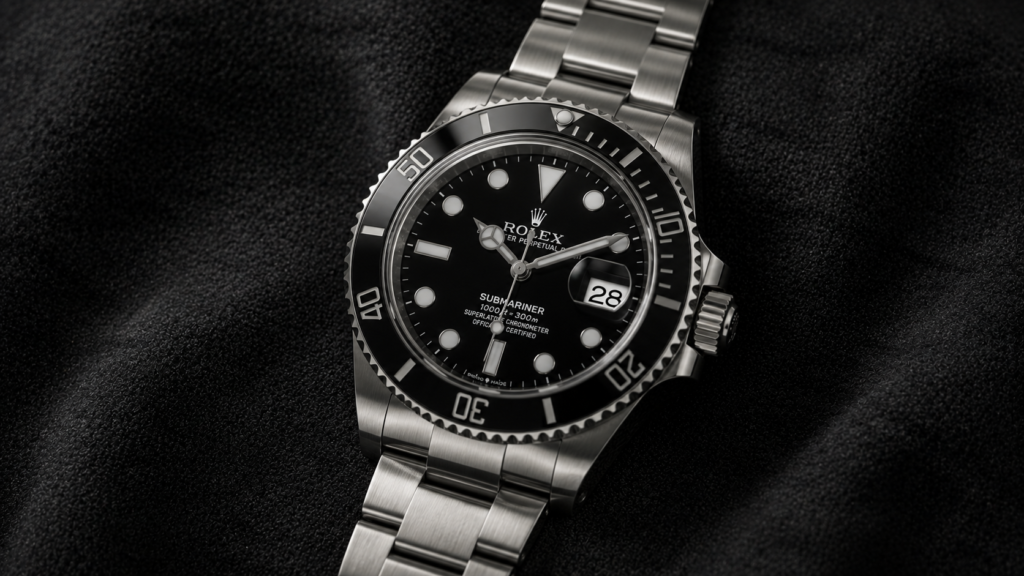
The Submariner is not a watch in the conventional sense; it is an asset class. At £8,100 retail for the no-date reference 124060 and approximately £9,200 to £10,300 for the date variants 126610LN and 126610LV, it sits at the heart of the most liquid and most analysed segment of the watch market.
Heritage matters here in a way it does not for most luxury goods. Introduced in 1953, the Submariner was the first dive watch capable of withstanding 100 metres. Every subsequent dive watch ever made, including the Black Bay 58, exists in dialogue with this reference. That history is not marketing copy. It is the foundation of the brand premium.
The current 124060 carries the Calibre 3230 with a 70-hour power reserve, a Cerachrom ceramic bezel insert that is effectively scratchproof, and the Oystersteel case construction that defines the brand’s manufacturing standard. The watch is technically excellent. But the technical case is not why anyone pays £8,100 for it.
You pay for the secondary market. A Submariner is universally recognised, universally authenticated, and universally liquid. There is no city on earth where a Submariner cannot be sold within a week at a defensible price. That global liquidity is the actual product Rolex sells. The watch is the delivery mechanism.
Investment Analysis: A Private Equity Perspective
When I apply the same valuation discipline I use professionally to these two watches, the picture becomes clearer than the enthusiast press suggests.
Five-year secondary market performance. The Tudor Black Bay 58 (ref. 79030N) has declined approximately 18.6% over five years, having normalised from pandemic-era premiums. The Rolex Submariner 124060 has declined approximately 6.2% over the same period. The Submariner Date 126610LN has held above retail for the entirety of its production run, having peaked near $18,000 in early 2022 and stabilised around $13,000 to $13,800 currently.
Retail vs market price. This is the decisive metric. The BB58 trades below retail on the secondary market. The Submariner 124060 trades 5% to 25% above retail depending on configuration, with the date references commanding higher premiums. If you buy the Tudor at retail, you accept day-one depreciation. If you can buy a Submariner at retail (the constraint, of course, is access), you are buying an asset that trades at a premium from the moment it leaves the boutique.
Liquidity. The BB58 sells in a median of 15 days, faster than 93% of watches on the secondary market. The Submariner 124060 sells in a median of 16 days and ranks in the top 4% of Rolex watches by popularity. Both are exceptionally liquid. The Submariner’s edge is in price stability during forced sales: in a buyer’s market, the Submariner holds; the Tudor concedes more.
Depreciation curves. The BB58 follows a classic luxury goods depreciation pattern: meaningful loss in years one to three, then stabilisation at roughly 75% of retail. The Submariner follows the inverted pattern unique to controlled-distribution Rolex sports references: appreciation from retail in years one to two (assuming retail-channel acquisition), then mean reversion to a defensible premium over retail.
Holding cost analysis. Over a five-year hold, the BB58 has cost approximately £600 in lost capital. The Submariner 124060 has cost approximately £500 in lost capital, on a base price more than double. On a percentage basis, the Submariner is materially more capital-efficient over a multi-year horizon, despite the headline price disparity.
The conclusion my models keep returning to: the Submariner is the better investment if you can acquire at retail. The Tudor is the better consumption purchase. These are not contradictory statements. They describe different financial frameworks.
Who Should Buy Which
This decision should be driven by career stage, capital position, and the signal you need to send. I will be direct about each scenario.
The Tudor Black Bay 58 is the correct choice if: you are an analyst, associate, or early-career VP in banking or buy-side; your total wrist budget is under £5,000; you want a serious watch that does not signal financial overreach; you have not yet built the dealer relationships required to access Submariners at retail; or you intend to wear the watch hard, including in casual and outdoor settings, without the psychological friction of risking a £10,000 piece.
The BB58 is also the right call for the senior professional who already owns dress watches and wants a competent sports watch that does not duplicate the messaging of more formal pieces. A managing director with a Calatrava and a Datejust does not need to buy a Submariner. A Black Bay 58 fills the dive watch slot at one-third of the cost with limited reputational difference at this seniority level.
The Rolex Submariner is the correct choice if: you have a director title or above with corresponding compensation; you want a single steel sports watch that you will own for the next twenty years; you can acquire at retail through an authorised dealer relationship; you value secondary market liquidity highly (for instance, if you may need to liquidate without a meaningful price concession); or you operate in client-facing roles where universal brand recognition adds tangible value to your interactions.
The Submariner is also the right call for buyers who travel extensively. A Submariner is identifiable in Tokyo, New York, Geneva, Dubai, and Singapore. The Black Bay 58 is identifiable to watch enthusiasts globally but not to the broader audience that informs business-context perception.
The honest signal differential. A Black Bay 58 says “I know watches and I am sensible with money.” A Submariner says “I have arrived and you should know it.” Neither is universally superior. Choose based on the room you are walking into.
Where to Buy in London
For the Submariner, the realistic acquisition strategy involves building a relationship with an authorised dealer over time. Watches of Switzerland operates the Submariner allocation through its Old Bond Street, Regent Street, Knightsbridge, Royal Exchange, and Canary Wharf locations. Mappin & Webb on Regent Street and at 1 Old Bond Street is another official channel. Harrods Fine Watch Room maintains a Rolex boutique with separate allocation. Bucherer in Covent Garden completes the authorised dealer roster. Walk-in retail availability of the 124060 is occasional; the 126610LN and LV are typically allocation-only.
For the Black Bay 58, retail acquisition is straightforward. The Tudor boutique at Harrods, Watches of Switzerland across its London locations, Mappin & Webb, and Bucherer all carry the current BB58 references with reliable stock. Expect to walk in and walk out the same day.
For pre-owned acquisition of either watch, Watchfinder & Co. is the institutional-grade option, with Richemont group backing and full authentication. Somlo London in the Burlington Arcade is the specialist’s choice for vintage Submariner references. For market pricing transparency, Chrono24 and WatchCharts Marketplace provide reliable comparison data.
A note on grey market Submariner purchases. You can acquire a 124060 in London tomorrow at approximately £9,500 to £10,500 through pre-owned channels, against £8,100 retail. The premium pays for immediacy and removes the dealer relationship requirement. For a buyer who values time over capital, this is rational. For a buyer building a long-term collection, the retail route is materially better economics.
Conclusion: The Verdict
If you can acquire at retail, buy the Submariner. The investment case, the liquidity profile, the signal value, and the long-term capital efficiency all favour it. The £5,000 spread over the Black Bay 58 is recovered within five years through superior price retention, and the optionality value of holding a universally liquid asset is meaningful.
If you cannot acquire at retail, or if your career stage makes the £10,000-plus secondary market entry feel like overreach, buy the Black Bay 58 without hesitation. It is not a compromise. It is the most rationally priced dive watch in luxury watchmaking, and it will not embarrass you on any wrist or in any room.
The wrong answer is to buy a Submariner at a 25% grey market premium because you cannot tolerate the wait. The wrong answer is to buy a Black Bay 58 and convince yourself you are saving money when you actually wanted the Submariner and could afford it. Both purchases reveal a deficit of patience or self-knowledge that the watch will not fix.
Buy the watch that matches your actual financial position and your actual market access. The watch market, like any market, rewards discipline. Behave accordingly.
DialAndYield.com analyses luxury watches as alternative assets for finance professionals. All prices in GBP are indicative as of Q2 2026, sourced from UK authorised retailers and secondary market data. Secondary market performance data sourced from WatchCharts, Chrono24, and Watchfinder & Co.