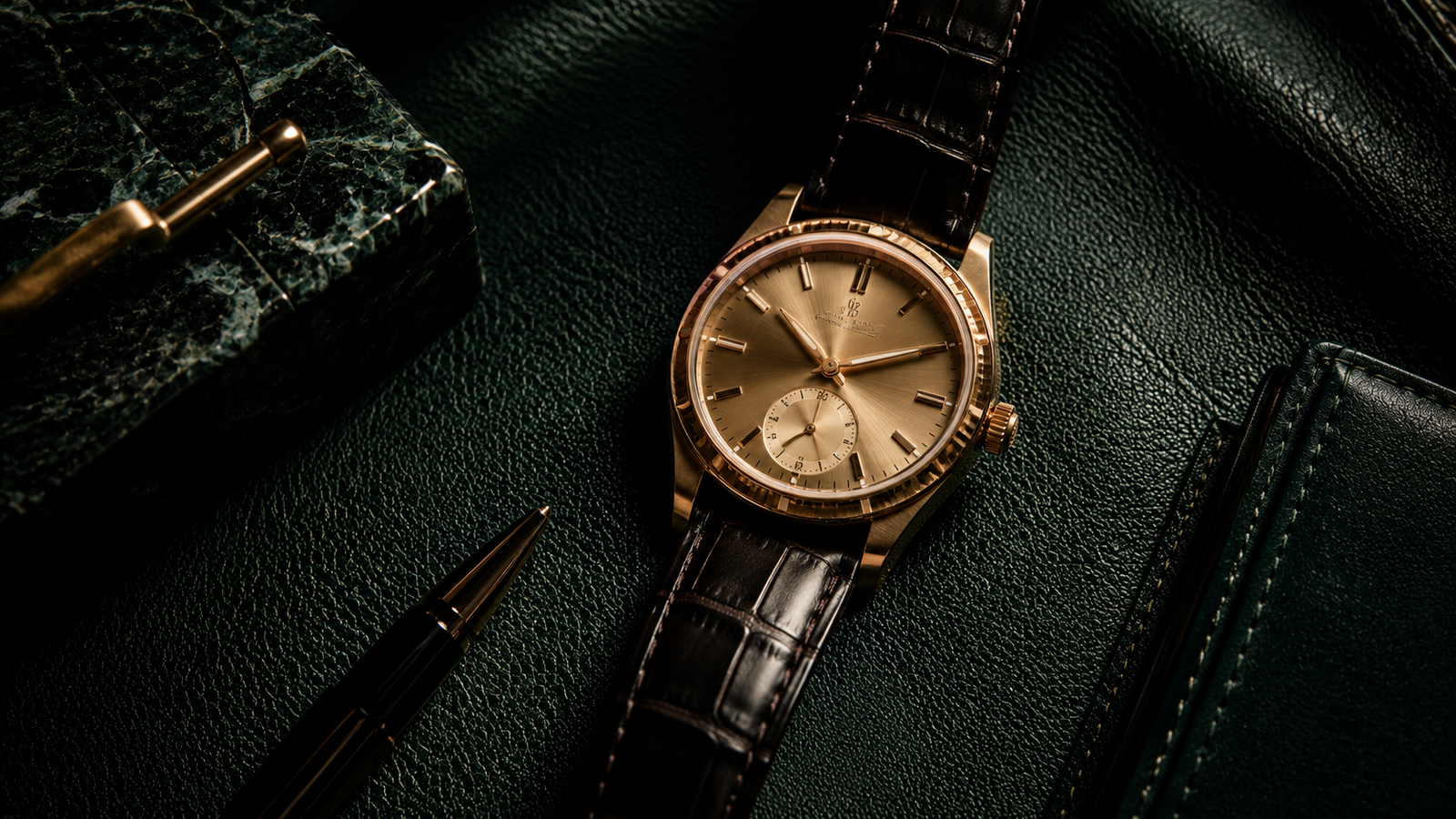
Best Watches for Finance Professionals in London
In the City of London, what you wear on your wrist is read before you finish your handshake. A watch is not jewellery; it is a signal of judgment, of long-term thinking, of knowing the difference between what depreciates and what endures. For finance professionals navigating boardrooms in Mayfair, trading floors in Canary Wharf, and client dinners in St. James’s, the right watch is the most efficient investment you will make in your personal brand.
What Your Watch Says About You in Finance
Every asset tells a story about the holder’s decision-making framework. Watches are no different. At senior levels in private equity, investment banking, and asset management, the watch is a proxy for taste, restraint, and the ability to distinguish signal from noise.
The finance professional who wears a blinged-out novelty piece communicates short-term thinking. The one in a clean, considered dress watch (particularly something with depth of craft that rewards a second glance) communicates exactly what the industry values: the capacity to see through surface-level appeal to underlying quality. In practice, that distinction matters. Managing directors at top-tier PE firms and long-only funds have told me the same thing in different words: nobody who understands value wears a watch that screams for attention.
There is also the question of social semiotics specific to London’s financial institutions. This city operates by unspoken codes. A Submariner on a Canary Wharf trading floor is entirely acceptable; the same watch at a Mayfair GP advisory dinner reads slightly off-register. A Calatrava in either setting is faultless. Understanding these gradations is part of operating at the highest level, and it starts with a clear-headed view of which watches actually belong in the conversation.
The 5 Best Watches for Finance Professionals
1. Rolex Datejust 41
Retail Price: From approximately £7,200 (stainless steel, ref. 126300) to £11,650 (white gold fluted bezel, ref. 126334)
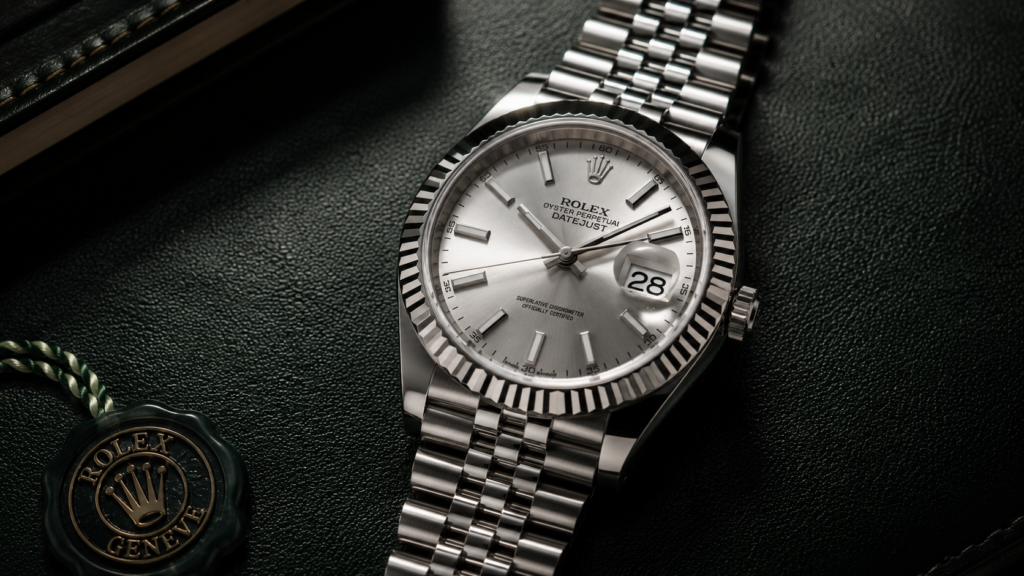
The Datejust is the defining professional watch of the 20th century, and it retains that position not through marketing but through relentless relevance. The 41mm case is precisely proportioned for a suited wrist: present without dominating, legible without flourish. The Jubilee bracelet on the 126334, white gold fluted bezel paired with Oystersteel, strikes the correct balance between dressed and casual that the City demands.
For a finance professional, the Datejust works because it is universally understood without being ubiquitous. It does not require explanation, does not invite envy, and does not date. The Calibre 3235 movement offers a 70-hour power reserve and COSC-certified chronometer accuracy, functional specifications that match the wearer’s standards.
Investment case: The ref. 126334 has appreciated 27.3% over five years on the secondary market, outperforming the WatchCharts Rolex Datejust Index by 7 percentage points. It currently trades approximately 22.7% above its US retail price. In London’s secondary market, full-set examples in steel fetch £10,250–£11,650, offering predictable liquidity with a 30-day median time-to-sale.
Where to buy in London: Watches of Switzerland (Regent Street, Old Bond Street flagship), Harrods Fine Watch Room, Bucherer Covent Garden. For pre-owned, Watchfinder & Co. offers authenticated examples with warranty.
2. Jaeger-LeCoultre Master Ultra Thin
Retail Price: From approximately £8,200–£10,000 (stainless steel, 39mm date references)
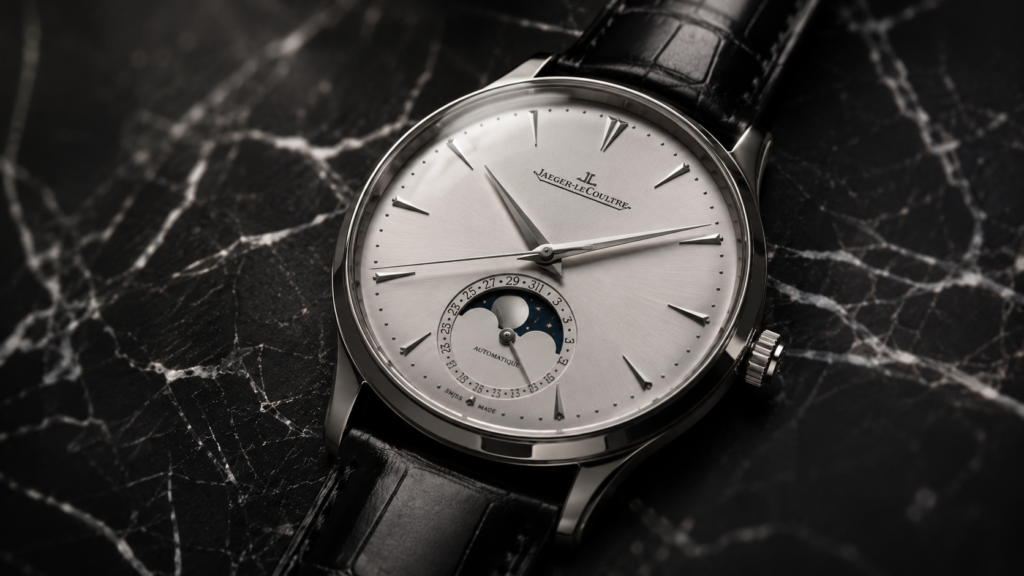
JLC occupies a curious and advantageous position in the watch hierarchy: revered by every serious horologist, yet conspicuously under-owned by those who form judgments on brand name alone. That asymmetry is precisely what makes it intelligent to wear in finance. The Master Ultra Thin, at 7.9mm thick, disappears under a shirt cuff entirely. It is, technically, one of the most disciplined achievements in case engineering; Swapping to a quality leather strap transforms the formality of any dress watch instantly, and the JLC wears best on a slim dark brown or black leather; a watch that has been thin since before thinness became a marketing exercise.
For the PE or hedge fund professional, it reads as connoisseurship without ostentation. It tells the person across the table that you have done your research, that you are not buying what others are buying, and that you value precision over prestige signalling. That is a useful communication to make quietly.
The in-house Calibre 899, with its 70-hour power reserve introduced in recent editions, removes any practical objection. The current grained copper dial limited editions (800 pieces each) represent the house at its most appealing to collectors who understand the concept of scarcity premium.
Investment case: JLC Master watches average around $8,000 on the secondary market, with secondary pricing generally running below retail for stainless steel dress references, meaning the investment case here is more reputational than financial. The watch is best understood as a carry asset: it holds its value, returns psychic income, and does not embarrass you on either end of a transaction.
Where to buy in London: JLC boutique on New Bond Street; Harrods Fine Watch Room; Wempe on New Bond Street. Pre-owned via Watchfinder & Co. or Chrono24.
3. A. Lange & Söhne Saxonia Thin
Retail Price: From approximately £18,000–£25,000 (rose gold, 37–40mm references)
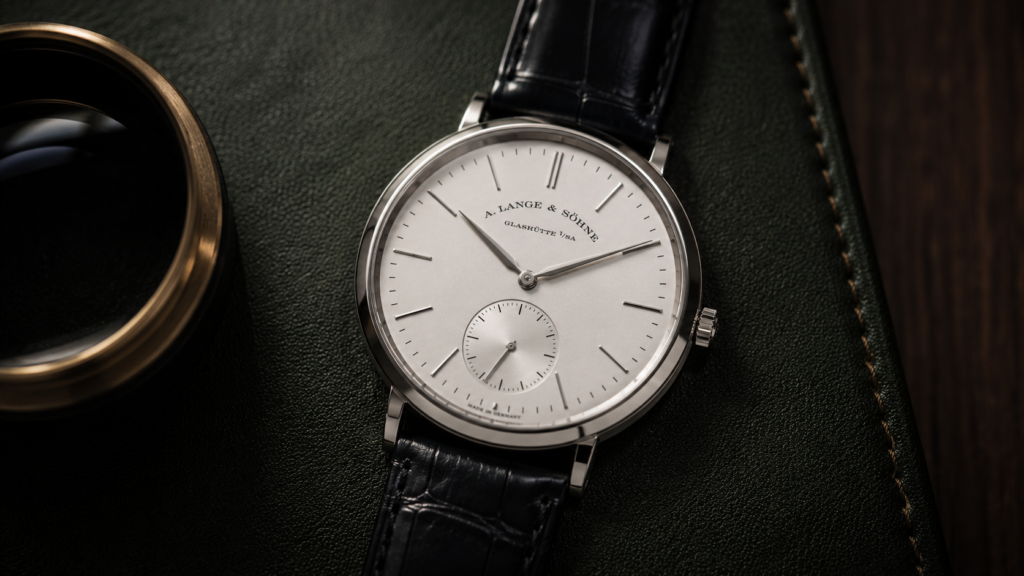
There is a version of this article that would not include a German watchmaker. That article would be wrong. A. Lange & Söhne, re-established in Glashütte in 1990 after the destruction wrought by both war and the GDR, produces movements of a finishing standard that the Swiss houses openly acknowledge as their benchmark. The Saxonia Thin, Lange’s purest dress watch, has no date, no seconds hand, no complications. Two hands. A silver dial. And a movement so precisely finished that it functions more like a piece of fine art displayed under glass than a utilitarian object.
For a senior finance professional who knows watches, and crucially for the fraction of people you will meet who also know watches, the Saxonia is a statement of absolute confidence. It does not seek recognition. It receives it from those equipped to give it. In the context of a Mayfair GP meeting, a Schloss conference, or a founders’ dinner, it is the right call.
The L093.1 calibre, hand-wound and entirely in-house, features Lange’s signature three-quarter plate, hand-engraved balance cock, and outsize date mechanism. The Saxonia Thin, in its stripped-back purity, forgoes the date entirely. That absence is the point.
Investment case: Secondary market pricing for older 37mm references sits between $11,000–$14,000, with larger sizes and special dials commanding more. Aventurine dial versions regularly trade above retail, demonstrating the premium collectors attach to aesthetic scarcity. The Saxonia is not primarily an investment vehicle; it is, however, one that holds its value with dignity, which, for a watch at this price point, is the correct metric.
Where to buy in London: A. Lange & Söhne boutique on New Bond Street. For pre-owned, Watchfinder & Co., Somlo in the Burlington Arcade (specialist in high-grade pre-owned), or Chrono24’s authenticated listings.
4. Patek Philippe Calatrava
Retail Price: From approximately £19,000–£35,000+ (gold references; the 5226G in white gold retails at approximately £32,000–£36,000)
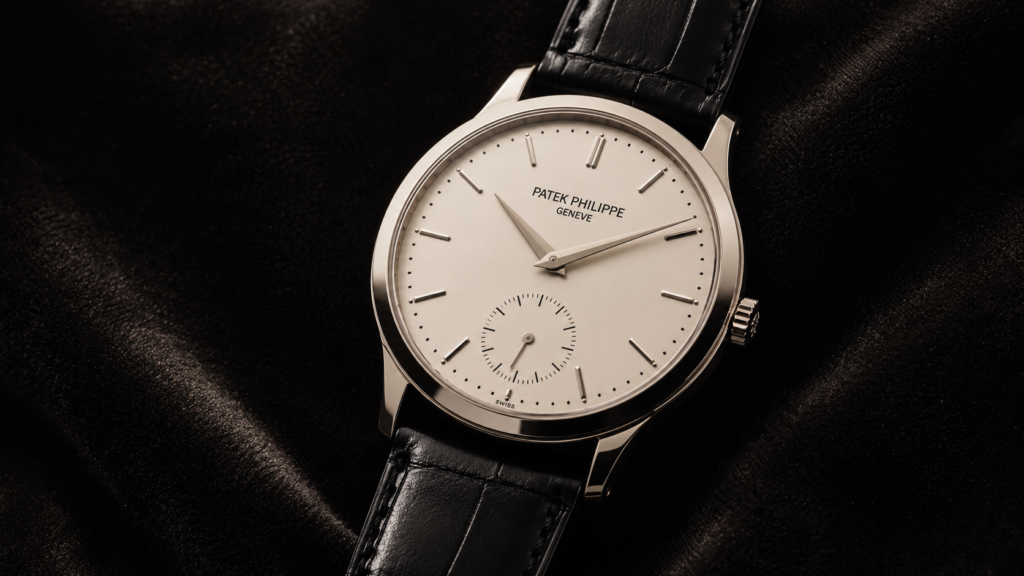
The Calatrava is the only watch in this list that does not need an introduction, and that is both its greatest strength and the source of its one genuine risk. Introduced in 1932 and inspired by Bauhaus principles of radical simplicity, it has remained the reference point against which all dress watches are measured. The current 5226G in white gold with its grained fumé dial and Calibre 26-330 S C is the house’s most sophisticated expression of the form.
In London’s financial community, a Calatrava communicates one thing without ambiguity: you have arrived. Not arrived as in “recently acquired wealth and need to show it,” but arrived in the sense that you understand the terminal point of the dress watch tradition and have no further decisions to make. It is the watch worn by the person who has stopped looking.
For those earlier in their career, this can read as presumptuous. For partners, managing directors, and senior principals, it is simply correct. The Calatrava is also the only watch in this list that you can confidently wear to a black-tie dinner, a client presentation, and a charity board meeting without making a single adjustment to the logic of your outfit.
Investment case: Select Calatrava references currently trade 5–15% above retail in full-set condition. Vintage references, particularly the original Ref. 96, continue to establish new auction records. The Calatrava represents Patek Philippe’s most stable category; it outperforms the Nautilus in consistency if not in headline return, and carries lower volatility than the sports references that dominate secondary market conversation. For a finance professional, that risk profile is familiar and appropriate.
Where to buy in London: Patek Philippe Salon, 10 Old Bond Street. This is the only route to a new Calatrava at retail; relationships matter, and allocation decisions at Patek are relationship-driven by design.
5. Tudor Black Bay 58
Retail Price: From approximately £3,050–£3,350 (stainless steel, ref. 79030N)
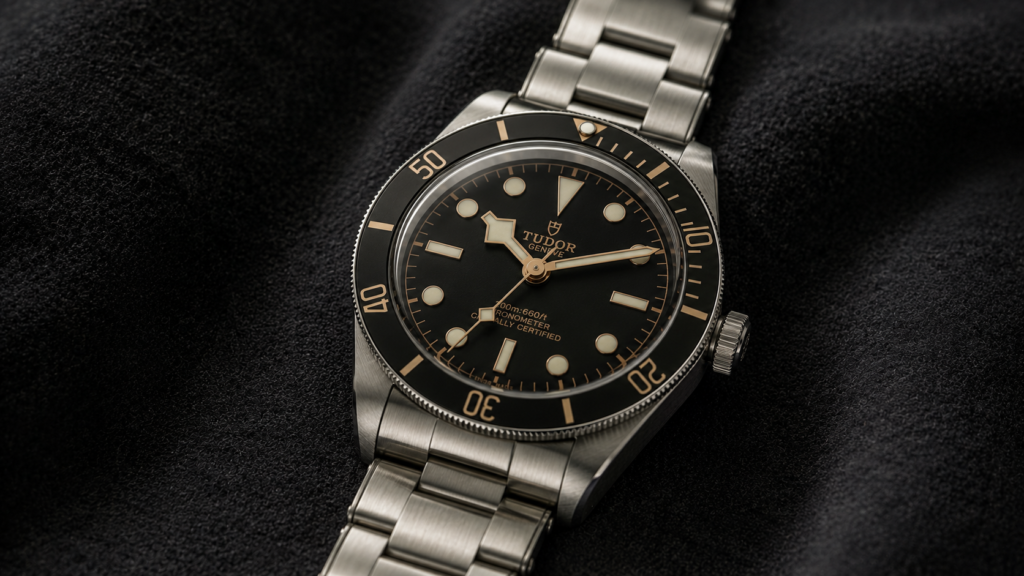
Including the Tudor here is a deliberate choice and one I will defend. The Black Bay 58 is not a compromise watch for someone who cannot afford better. It is the correct watch for a specific professional profile: the analyst, associate, or early-career VP who is building their reputation rather than announcing an arrived one. Wearing a Calatrava at VP level reads as financially imprudent or heavily leveraged; neither is the signal you want. The Black Bay 58, by contrast, reads as someone who knows watches, exercises discretion with money, and understands proportionality.
The 39mm case, sized after the 1958 Tudor diving reference, wears with remarkable elegance for a tool-watch lineage. The gilt indices and snowflake hands on the black-dialled version give it warmth that the larger Black Bay 41 lacks. The in-house MT5402 movement (70-hour power reserve, COSC chronometer certified) is an entirely capable workhorse, and Rolex’s ownership of Tudor provides the institutional infrastructure that underpins long-term brand credibility.
Investment case: The secondary market picture is honest: the BB58 currently trades approximately 18.6% below retail over a five-year horizon, having normalised from pandemic-era premiums. However, liquidity is exceptional: a median of 15 days to sell, faster than 93% of watches on the market. For a professional who views the watch primarily as a wearable asset with limited depreciation exposure, the Black Bay 58 is the most rational entry point in this list. Buy at retail through an authorised dealer, wear it for five years, and sell at a modest haircut; the cost-per-wear arithmetic is compelling.
Where to buy in London: Tudor boutique at Harrods; Watches of Switzerland (multiple City and West End locations); Bucherer Covent Garden. Stock availability is generally good relative to Rolex.
Investment Value – Which Holds Value Best?
Treating watches as financial assets requires the same analytical rigour you would apply to any alternative investment. Liquidity, volatility, return profile, and correlation to other assets all matter. The short answer: Rolex and Patek Philippe dominate the investment case; JLC and Lange reward connoisseurship rather than capital appreciation; Tudor is a liquid consumer asset with low depreciation risk.
The Datejust 41 ref. 126334 is the most demonstrably investable watch on this list: 27.3% appreciation over five years, 30-day median sale time, and consistent demand across market cycles. Rolex’s controlled distribution and deliberate scarcity create structural upward price pressure that other brands cannot replicate without Rolex’s brand depth.
The Calatrava’s investment case is subtler. Select references trade 5–15% above retail, but the real value proposition is optionality: vintage Calatravas routinely establish auction records, meaning the long-term collector case is significantly stronger than the short-term secondary market suggests. If you buy a Calatrava at the right moment in a reference’s lifecycle, particularly at or near discontinuation, the asymmetry is attractive.
The Saxonia Thin and the JLC are best understood as stores of value rather than appreciation vehicles. Both hold with dignity; neither is likely to double. For the finance professional whose primary motivation is wearing something exceptional, that framing is entirely appropriate.
Tudor Black Bay 58: do not buy it as an investment. Buy it as an excellent watch that will not embarrass you financially when you decide to move on.
One cross-cutting observation: box and papers add 10–20% to secondary market value across all five models. Buy full set, store the documentation, and treat the original packaging as part of the asset.
Where to Buy in London
London’s watch retail infrastructure is genuinely world-class. The concentration of authorised dealers, independent specialists, and auction houses within a 2-mile radius of Bond Street is unmatched outside Geneva.
For new watches at retail: The key addresses are Watches of Switzerland (Old Bond Street flagship, now the city’s official Rolex boutique; Regent Street for broader inventory), the Patek Philippe Salon at 10 Old Bond Street, the A. Lange & Söhne boutique on New Bond Street, and the Jaeger-LeCoultre boutique on New Bond Street. Harrods Fine Watch Room in Knightsbridge deserves particular mention: it houses branded corners for every major house, offers unparalleled access to models across marques, and its Fine Watches team carries genuine expertise.
For pre-owned: Watchfinder & Co. is the institutional-grade option, authenticated, warrantied, and operated with the credibility of Richemont group backing. Somlo in the Burlington Arcade is the specialist’s choice, particularly for vintage Rolex, Patek Philippe, and German makers. For international market pricing and private-sale access, Chrono24 and WatchCharts Marketplace provide the transparency that the pre-owned market historically lacked.
Auction: Christie’s and Sotheby’s both maintain active watch departments in London, with regular sales offering access to rare Calatrava and Saxonia references at prices that occasionally undercut the secondary dealer market.
Conclusion: The Watch as a Financial Asset
The finance professional’s relationship with a watch is structurally different from other luxury consumers. You are accustomed to applying a valuation framework to every acquisition. The question is not whether you can afford it; the question is whether the asset is priced correctly, whether it communicates the right signals to the right counterparties, and whether the downside is bounded.
On those terms, this shortlist passes scrutiny. The Datejust 41 offers Rolex’s structural investment properties in a dress-appropriate format. The Calatrava is the terminal point of the dress watch tradition and the most defensible long-hold in watch collecting. The Saxonia Thin is the right watch for the investor who understands that genuine scarcity commands a premium that brand recognition alone cannot manufacture. The JLC Master Ultra Thin is the intelligent alternative, priced for the knowledgeable buyer in a market that has not fully repriced it. And the Tudor Black Bay 58 is the most rational entry point for those building both their career and their collection simultaneously.
The deeper point is this: a watch, unlike most luxury goods, is a tangible asset with a functioning secondary market, institutional-grade price data, and a collector base that continues to deepen. Bought with the same diligence you apply to any investment decision (the right reference, the right condition, the right timing) a watch purchased in London today can be sold in a decade at a price that makes the arithmetic more interesting than you might expect.
The City still reads your wrist. Make sure it likes what it sees.
DialAndYield.com covers the intersection of horological excellence and investment strategy for finance professionals. All prices in GBP are indicative as of Q2 2026 and sourced from London authorised retailers and secondary market data. Secondary market data sourced from WatchCharts, Chrono24, and Watchfinder & Co.