What Your Watch Says About You in the City of London
In finance, everything is a signal. Your suit, your school, your handshake, your vocabulary. But those signals take seconds to decode. Your watch is read in the first fraction of a second, before you have said a word, before you have handed over a business card, before the meeting has started. You learn this quickly in the City. Every senior person I have sat across from in Mayfair, Canary Wharf, and St. James’s has been, on some level, reading the room by reading wrists. Most of them would not admit it. All of them do it.
This is not a guide to the most expensive watches. It is a guide to what your watch communicates, who it communicates it to, and how to think about that communication at each stage of a finance career. It is the kind of analysis nobody puts in a formal induction but everyone eventually figures out, usually after at least one expensive mistake.
The Language of Watches in Finance
Finance has a specific cultural relationship with watches that differs from law, medicine, or consulting. In law, watches signal seniority and tradition. In consulting, they signal taste. In finance, they signal judgment. The reason is that finance professionals, more than most, understand the relationship between cost, value, and the signal those two things send independently of each other. A watch that cost £50,000 and looks it communicates one thing. A watch that cost £8,000 and tells a more interesting story to the people who know what they are looking at communicates something entirely different. The second message is more powerful.
The unspoken hierarchy in the City works roughly as follows. At the junior end, a serious mechanical watch signals that you understand the culture and have made a considered choice. At mid-level, the watch you choose indicates how well you understand your own career position, whether you are buying to impress or buying because you know exactly what you want. At senior levels, the watch on a principal’s or partner’s wrist communicates where they are in the arc of accumulation: still proving themselves, settled in their success, or somewhere beyond both of those things into genuine connoisseurship.
The most common mistake is buying for the wrong audience. A watch that impresses peers is not always a watch that impresses clients or superiors. The two audiences read different things.
What Each Watch Category Communicates
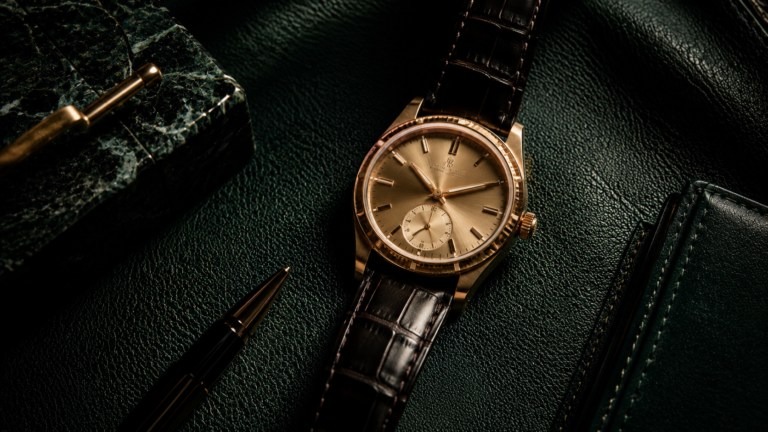
Dress watches communicate control and long-term thinking. A clean, well-proportioned dress watch (round case, leather or integrated strap, no complications visible at a glance) tells the room that you are not competing on visible wealth. You are competing on taste. In client-facing roles and in the GP meeting context, this is precisely the right message. The watch that disappears under a shirt cuff and only reveals itself at the table is working harder for you than the one that announces itself from across the room.
Sport watches communicate that you know the category, that you have the access, and that you can afford the dress watch but prefer this. A steel Rolex Submariner at a GP advisory dinner in Mayfair is a correct signal when the wearer is confident enough to carry it. It says: I am not here to play by your rules about formality. The same watch on a junior VP reads as overreach. Context is everything.
Oversized or heavily branded sport watches communicate that you have arrived at the price point but not at the judgment. A 45mm chronograph with a rubber strap and visible branding in a client presentation communicates that aesthetics are not a priority. In finance, that is rarely the reading you want.
Independent makers (F.P. Journe, Voutilainen, Akrivia) communicate something very specific: you know watches at a level that most people in the room do not. This either works brilliantly or reads as showing off, depending entirely on whether there is anyone in the room who can decode it. In most City contexts, independents are wasted signals. In a watch-literate GP conversation, they are the most powerful signal of all.
The Watches That Work in Every Room
Four references that will not fail you in any professional setting, from analyst intake day to close-of-fund dinner.
Rolex Datejust 41 (from £7,200 to £11,650).
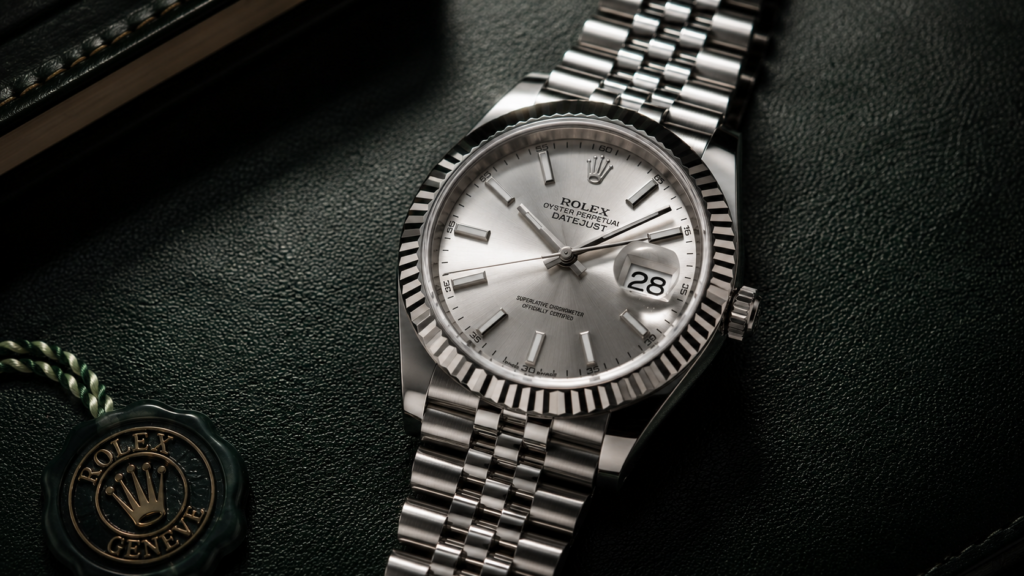
The most broadly correct watch in professional finance. The 41mm Oystersteel case is legible without being loud, universally recognised without being ubiquitous, and works from a City desk to a formal client dinner without adjustment. The white gold fluted bezel reference 126334 at £11,650 adds a dress-watch register without crossing into flashiness. For a longer analysis of where the Datejust sits in the investment hierarchy, see Best Watches for Finance Professionals in London.
Jaeger-LeCoultre Master Ultra Thin (from £8,200 to £10,000).
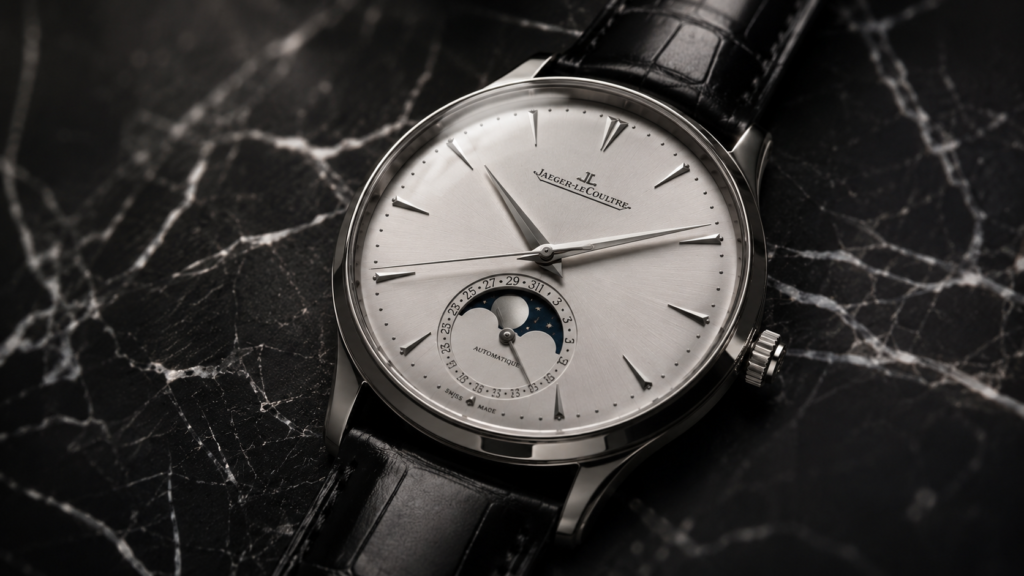
The watch that signals you have done your research. JLC is revered by every serious horologist and under-owned by everyone who forms opinions on brand name alone. The Master Ultra Thin at 7.9mm thickness disappears under a shirt cuff entirely. In a Mayfair GP setting, it reads as the most credible signal of connoisseurship in this price band. The people who notice it are exactly the people you want noticing it.
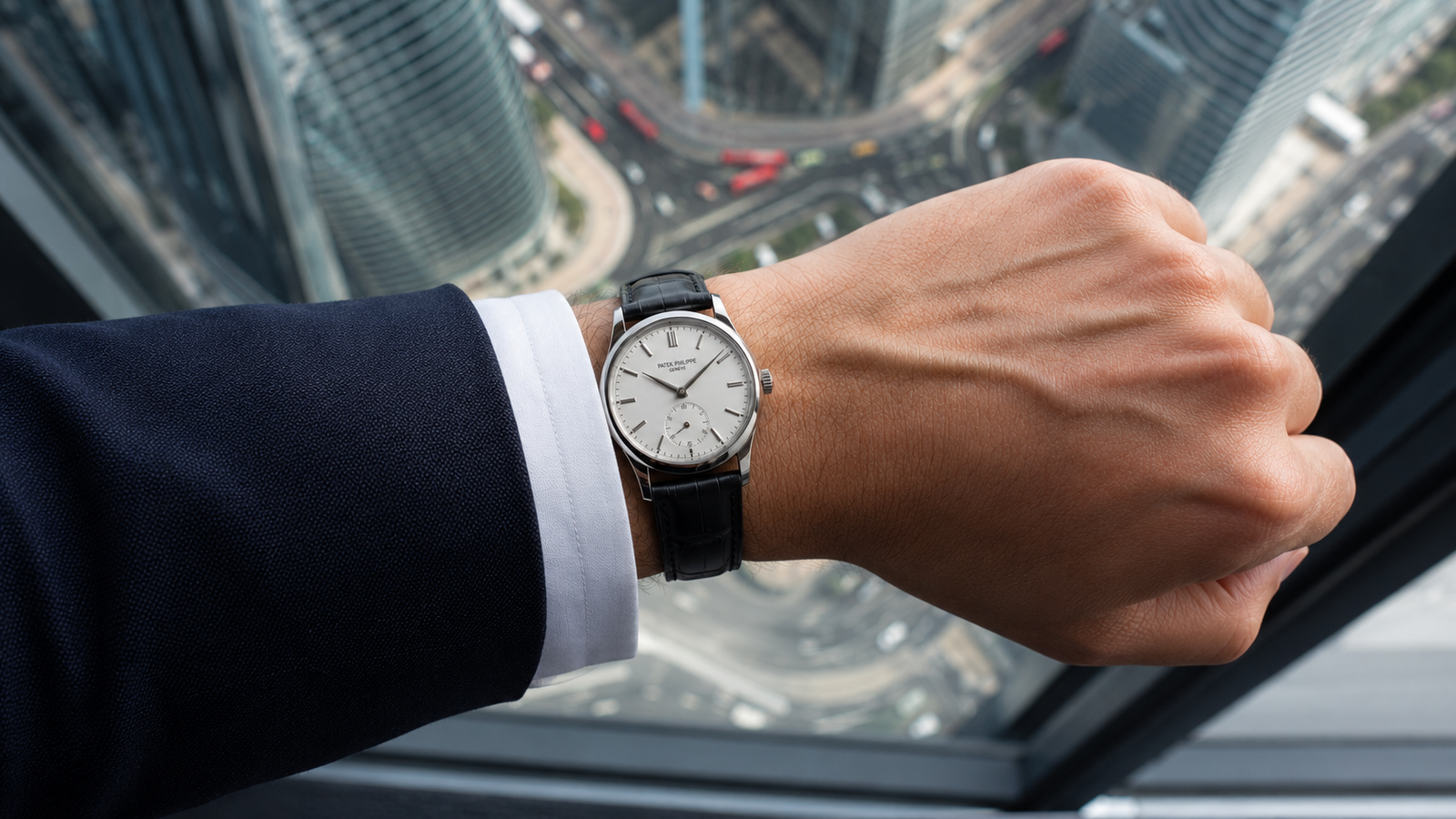
Patek Philippe Calatrava (from £19,000 to £35,000+).
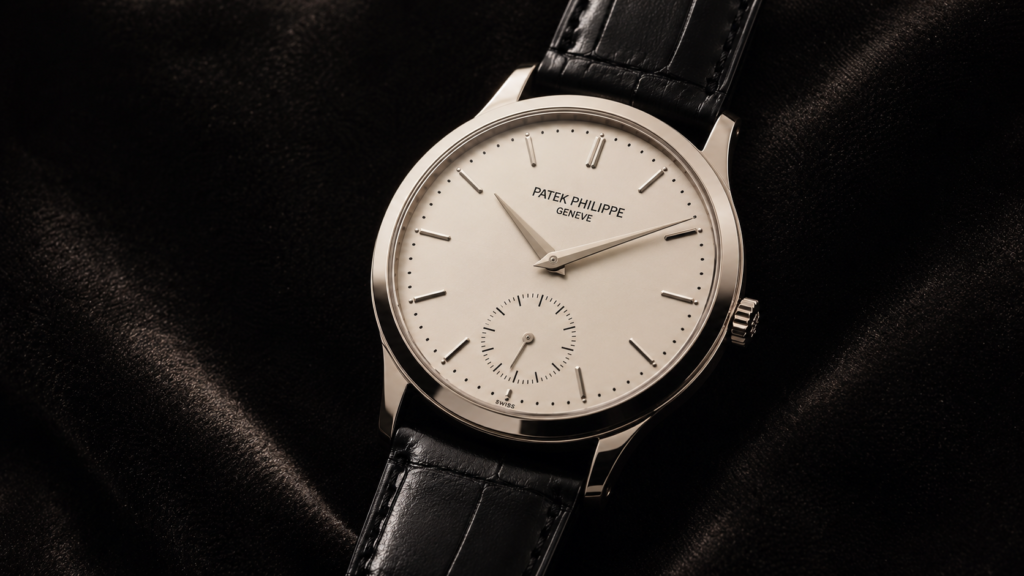
The terminal point of the dress watch tradition. If the Datejust says “I understand the category,” the Calatrava says “I have stopped looking.” It is correct for partners, managing directors, and senior principals. At VP level, it can read as aspirational overreach, which is a different communication entirely. Wear it when you have earned it and know you have.
Cartier Tank Must / Tank Solo (from approximately £3,000 to £7,000 retail; pre-owned from £2,200).
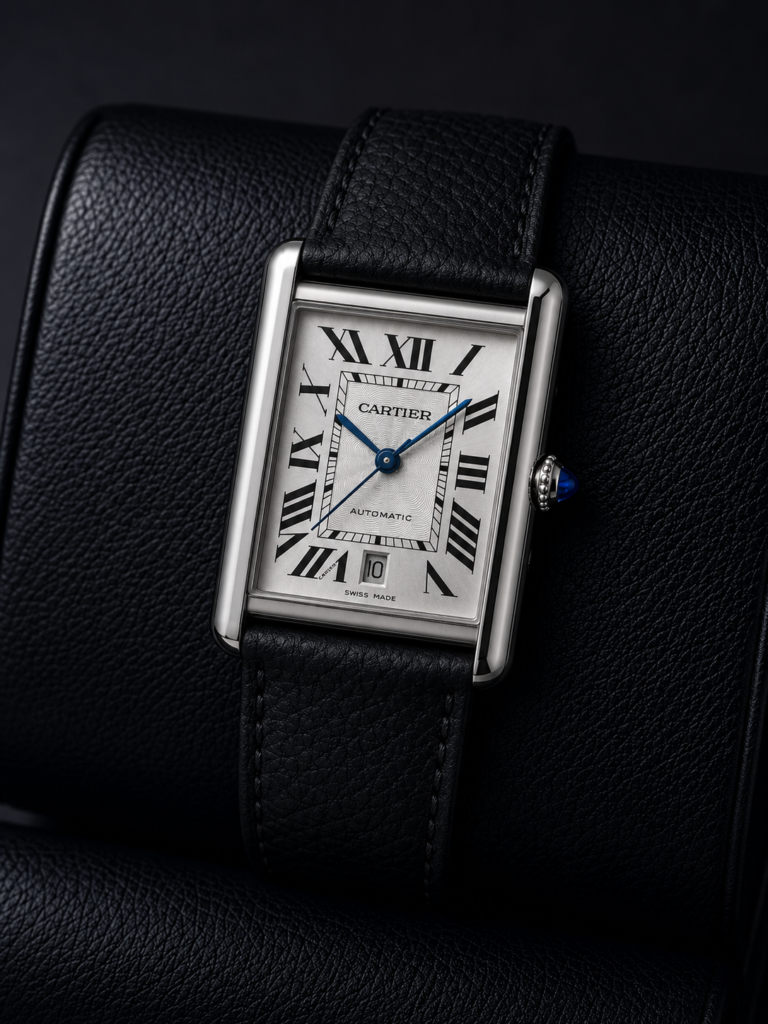
The one fashion-house watch that genuinely works in finance, and the exception that proves the rule about avoiding fashion brands. The Tank is not primarily a fashion watch. It is a 1917 Art Deco design that was inspired by military engineering, worn by Andy Warhol, Jackie Kennedy, and Princess Diana, and it predates the concept of “luxury fashion” as a category. The quartz-movement Tank Must in steel starts at approximately £3,000 retail and sits 19.7% below retail on average on the secondary market; the mechanical versions and gold configurations reach £7,000 and beyond. The Tank’s investment case is modest. Its signal case is excellent: it communicates aesthetic intelligence over horological credibility, which is a legitimate and useful message in contexts where you want to read as creative or unconventional. The philosophy it embodies (buy quality from 1917, hold it indefinitely, do not chase trends) is the kind of investment discipline that finance professionals understand intuitively. Choose something with genuine heritage and never look at another watch again.
The Watches That Send the Wrong Signal
Fashion brand watches. Watches from fashion houses, regardless of their retail price, carry brand premium without watchmaking content. At £2,000 to £5,000, they depreciate 50% to 70% within two years and communicate that you prioritised badge over substance. In a room of finance professionals, this is the worst of the available signals.
Oversized chronographs in professional settings. A 44mm rubber-strapped chronograph is a leisure watch. Worn to a client advisory board meeting or a GP presentation, it communicates that you have not thought through the context, which is precisely the opposite of what you want a partner or an investor to conclude about your judgment.
Heavily jewelled pieces before you are a principal. Watches set with diamonds or coloured stones at associate or VP level read as insecurity. They communicate that you need the watch to announce the wealth rather than the wealth being established enough to be taken for granted. There is a stage of career where jewelled pieces become simply elegant. That stage is later than most people think.
Apple Watch at managing director level in client-facing roles. The Apple Watch is entirely defensible in a tech company, in a startup context, or at the gym. At an MD or partner level in traditional finance (PE, investment banking, long-only asset management), wearing a smartwatch to a formal client dinner communicates that you either do not know the room or do not care about it. Neither reading is useful. The Apple Watch is a competent device. It is not a signal of good judgment in a context where good judgment is the product you are selling.
How Watch Choice Evolves With Career Stage
The progression should be deliberate, not aspirational. Buying ahead of your career stage is as problematic as ignoring the question entirely.
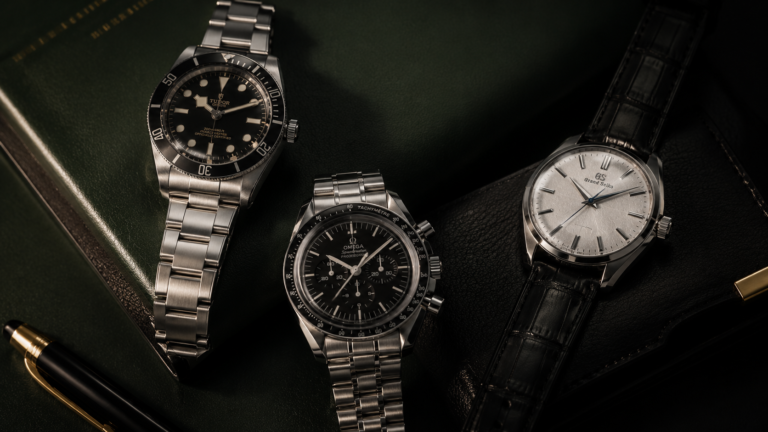
Analyst and Associate (Years 1 to 4). The correct objective is a credible mechanical watch that demonstrates you understand the culture without overclaiming. The Tudor Black Bay 58 at £3,050 to £3,350 is the best single answer here: in-house movement, correct proportions, no depreciation anxiety, and the right signal of someone who knows watches and exercises capital discipline. A pre-owned Omega Speedmaster Professional at £4,000 to £4,500 works for the same reasons. For a full analysis of the best options at this level, see Best Watches Under £5,000 for Investment.
Vice President (Years 5 to 8). The Rolex Datejust 41 becomes appropriate, as does a pre-owned Submariner if you have authorised dealer access. The JLC Master Ultra Thin at £8,200 to £10,000 is the most sophisticated single choice at this stage. Avoid the Royal Oak and Nautilus at VP level unless your compensation genuinely puts them in proportion. Wearing a £25,000 watch while your year-end is not yet confirmed communicates financial imprudence rather than success.
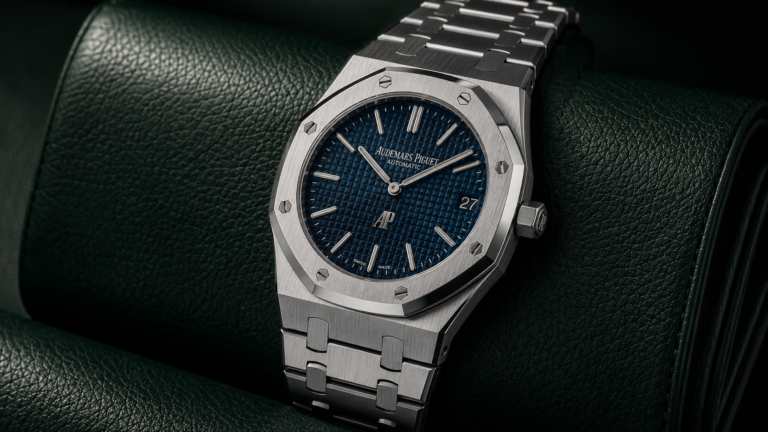
Director and Senior VP. The full Rolex sport watch range becomes entirely appropriate. The AP Royal Oak 15500ST at £25,000 to £27,000 retail, if you can access it at retail, makes its first appearance as a defensible choice. The Patek Calatrava enters the range for the first time and reads correctly in formal contexts.
Managing Director and Partner. The field is wide open, and the judgment question is no longer about which watch is appropriate; it is about which watch reflects who you actually are. The Patek Nautilus 5711/1A, the AP Royal Oak Jumbo, the Lange 1, the F.P. Journe Chronometre Bleu: all defensible. All read correctly at this level. The only remaining mistake is buying something to impress people who already know you are an MD or a Partner.
The Investment Angle: Wearing Your Portfolio
Every watch decision at the price points relevant to a senior finance professional is also an allocation decision. Spending £25,000 on a Royal Oak Offshore that loses 15% to 20% of its value within two years is not a neutral act. It is a capital allocation choice with a measurable cost.
The discipline is to apply the same valuation framework to the wrist as to any other alternative asset. Rolex sport models, Patek Nautilus, and AP Royal Oak Jumbo references have documented secondary market performance, verifiable liquidity metrics, and fifteen-year return histories. The Datejust has appreciated 27.3% over five years. The Submariner holds within 5% to 10% of retail. The Jumbo 15202ST, acquired at current post-correction prices, represents a defensible multi-year hold. The Cartier Tank is not primarily an investment vehicle, but it does not embarrass you financially on exit. The fashion brand watch is a cash expense that becomes smaller every year.
Wearing your portfolio means buying what will hold value at your level rather than what flatters your vanity at a lower level. The logic is identical to any other allocation decision. For the complete framework on how watches fit within a broader alternative asset allocation, see Watches as Alternative Assets in 2025: The Complete Investment Guide.
Conclusion: Choose With Intention
There is no neutral watch choice in the City of London. Every reference communicates something. The question is whether you are choosing what it communicates or whether you are leaving that to chance.
The people who read your watch are not always the people who will tell you what they concluded. The MD who glanced at your wrist in the first thirty seconds of a meeting and formed an opinion will not discuss it with you. That opinion will, however, inform how they calibrate your judgment on everything else. It is not the most important signal you send. But it is the first one. Make it deliberate.
DialAndYield.com analyses luxury watches as alternative assets for finance professionals. All prices in GBP are indicative as of Q2 2026, sourced from UK authorised retailers and secondary market data.