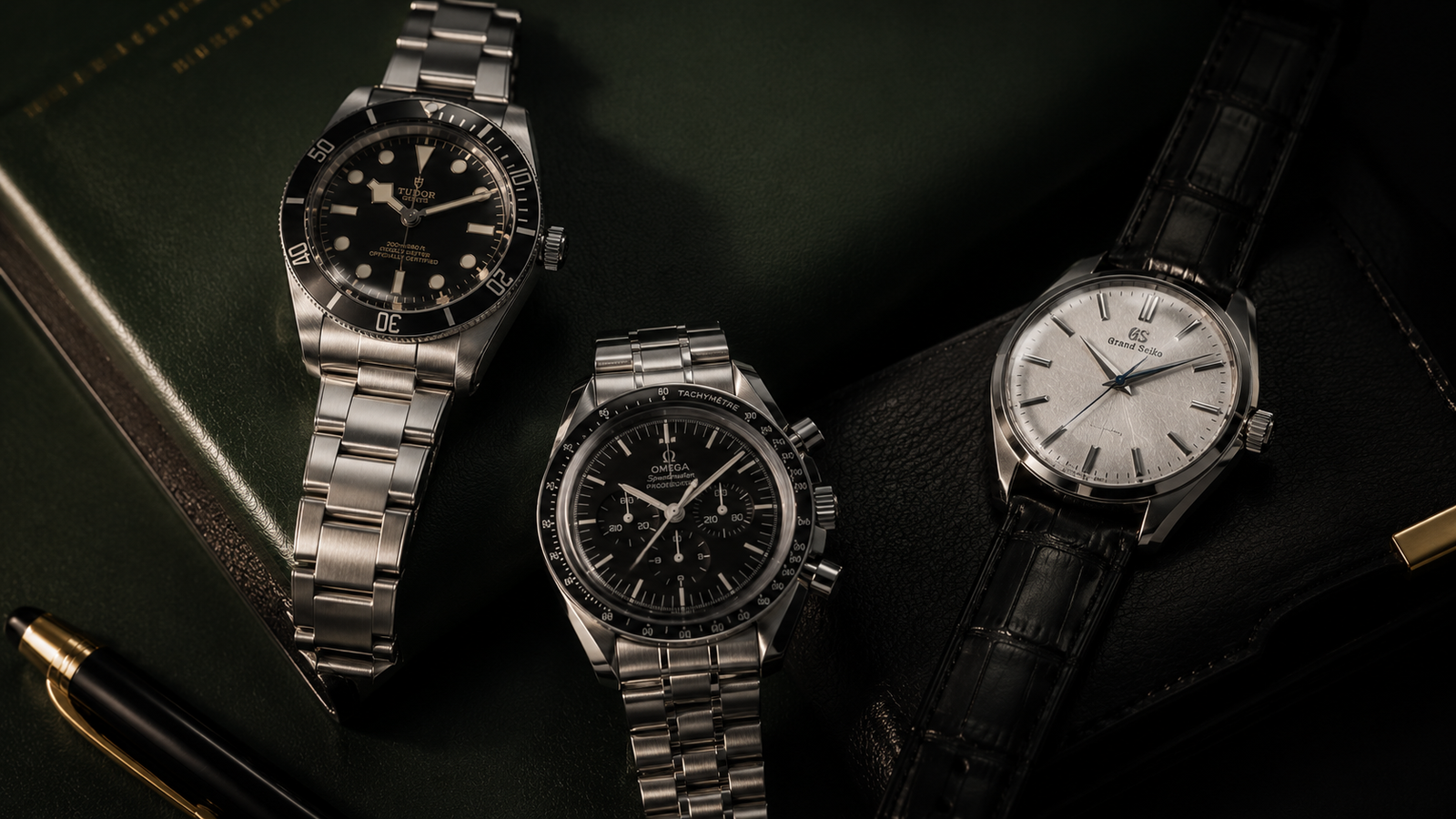
Best Watches Under £5,000 for Investment: The Definitive Guide
The sub-£5,000 segment is the most rational entry point in watch investment, not because the returns are highest (they are not) but because the downside is bounded, the liquidity is excellent, and the learning curve is paid for at a price point that does not threaten capital. A first watch purchase at £25,000 made before you understand reference variants, dealer relationships, and the spread between asking and transacted prices is an expensive lesson. The same mistake made at £3,500 is a manageable one. For the finance professional building a watch position, this segment is where discipline is developed and the framework is calibrated.
What to Look For in a Watch Under £5,000
Four criteria separate investment-grade watches in this segment from the noise.
Brand credibility with secondary market depth. A watch must be liquid to be an investment. That means a brand the next buyer will recognise without education. Tudor, Omega, Longines, Seiko, and Grand Seiko meet this bar. Fashion brands with watch divisions (regardless of their primary-market pricing) do not. The test is simple: search the reference on Chrono24 and confirm there are at least fifty active listings across multiple geographies. Below that threshold, liquidity risk dominates any other consideration.
Movement quality. Sub-£5,000 watches now include genuinely sophisticated mechanical movements: Tudor’s in-house MT5402 with 70-hour power reserve and COSC certification, Omega’s Master Chronometer Calibre 3861, Grand Seiko’s Spring Drive 9R65. The mechanical content directly supports long-term value. Quartz movements at this price point depreciate more aggressively except in specific Grand Seiko 9F references.
Documented secondary market data. WatchCharts maintains five-year price history on every major reference in this segment. Before any acquisition, verify three data points: median days to sell, current secondary-to-retail ratio, and one-year price trend. A watch that takes ninety days to sell at this tier is functionally illiquid; thirty days or fewer is the threshold.
Full set documentation. Box and papers add 10% to 20% to resale value across this segment, more in percentage terms than at higher price points because the absolute spread to no-papers examples is proportionally larger. Treat documentation as part of the asset from day one.
The Best Watches Under £5,000 Right Now
Six references that satisfy the criteria above and represent the most defensible investment positions in the segment.
1. Tudor Black Bay 58 (Reference 79030N)
Retail price: £3,050 to £3,350.
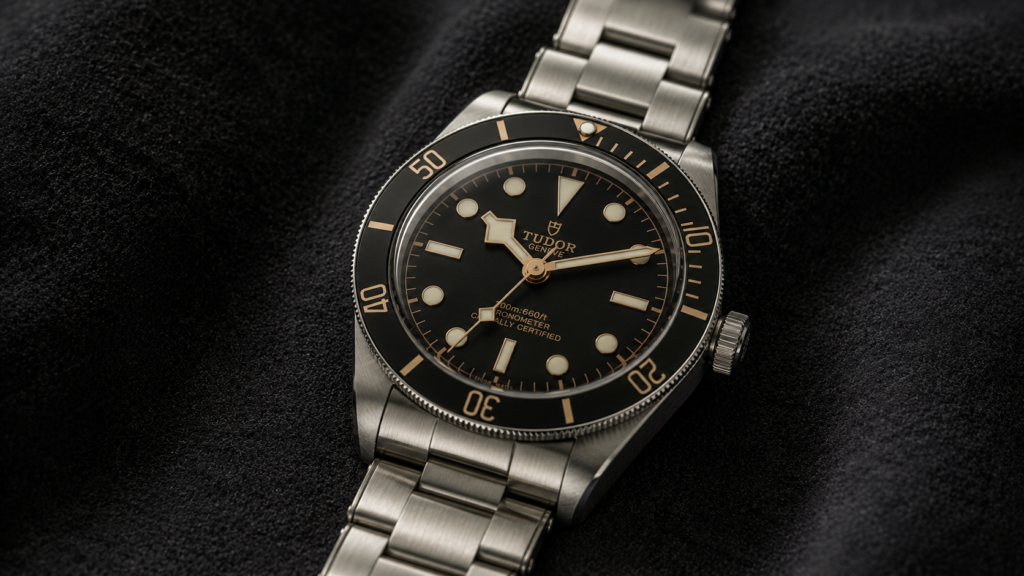
The most rationally priced dive watch in luxury watchmaking. The 39mm case, MT5402 in-house movement, and gilt-dial styling deliver approximately 85% of the technical content of a Rolex Submariner at less than 40% of the price. Five-year secondary market performance shows a 18.6% decline from pandemic-era highs, but the watch sells in a median of 15 days, faster than 93% of watches on the secondary market. For a deeper comparison with its direct competitor, see Tudor Black Bay 58 vs Rolex Submariner. The BB58 is not an appreciation play. It is a low-depreciation wearable asset with exceptional liquidity, which at this price point is the correct investment profile.
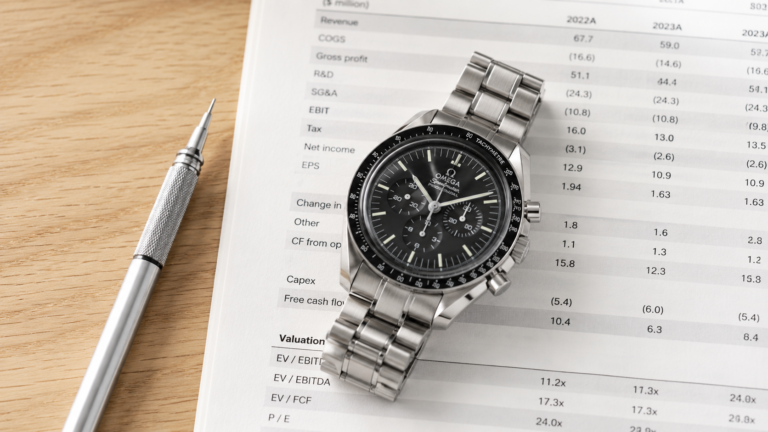
2. Omega Speedmaster Professional Moonwatch (Pre-Owned)
Retail price: £6,500 to £7,000 new. Pre-owned market: £4,000 to £4,500 for the previous-generation 311.30.42.30.01.005 (Caliber 1861, Hesalite crystal).
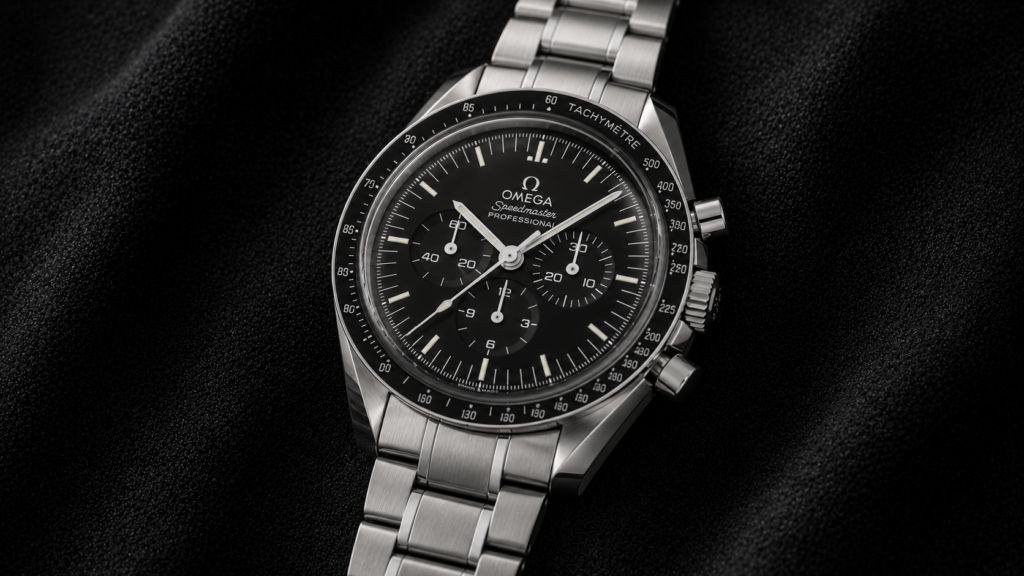
The Moonwatch is the only luxury chronograph with genuine historical content (NASA flight qualification, Apollo 11 lunar surface) and a multi-decade track record of stable secondary market pricing. The current Caliber 3861 reference exceeds £5,000 retail, but pre-owned previous-generation examples trade comfortably within the budget. Liquidity is excellent: even allowing for Omega’s brand-wide 28% retail-to-secondary discount, the Speedmaster Professional sells in approximately 43 days, faster than 92% of watches on the market. The investment case is preservation rather than appreciation, with the additional optionality that limited editions and discontinued references can outperform materially.
3. Longines Heritage Spirit Zulu Time
Retail price: £2,300 to £2,800.
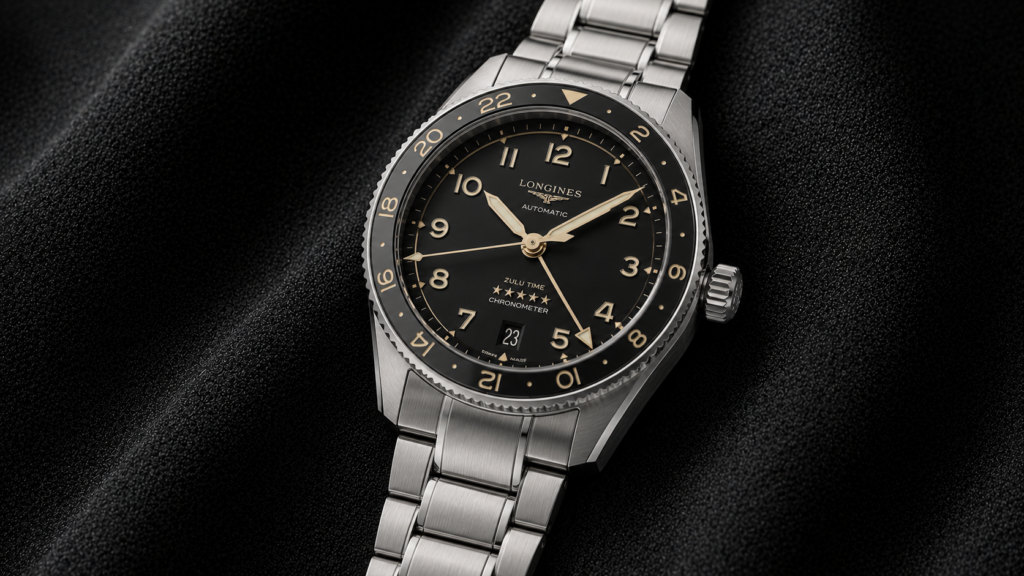
Longines occupies an underappreciated position in the value retention league. The Spirit Zulu Time, with its column-wheel chronograph movement and silicon balance spring, offers true GMT functionality and Swiss heritage content at a price point where competitors typically deliver mass-market specifications. The Heritage collection more broadly (the Heritage Military and Heritage Classic references in particular) has demonstrated strong secondary market stability. Longines does not appreciate dramatically, but it depreciates more slowly than peers in this segment, which is the relevant metric for capital preservation at the entry tier.
4. Tissot PRX Powermatic 80
Retail price: £695 to £795 (steel bracelet).
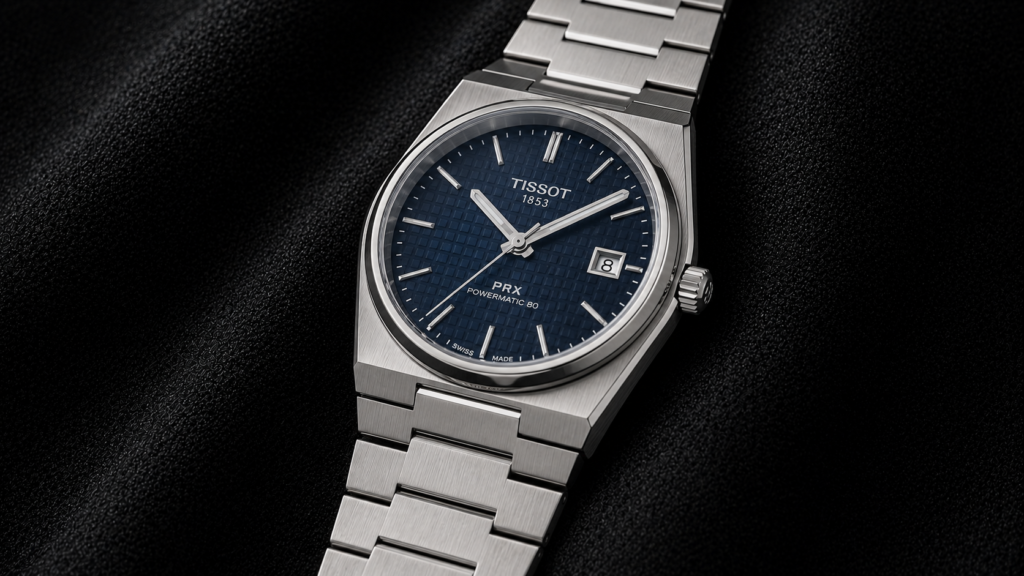
An unconventional inclusion, but the data supports it. The PRX Powermatic 80 has become the most successful integrated-bracelet watch in its price band, with secondary market pricing holding remarkably close to retail and waiting lists at authorised dealers for popular dial variants (notably the “Ice Blue” and forest green configurations). The mechanical Powermatic 80 movement delivers an 80-hour power reserve. For a buyer under thirty entering the watch market or for a portfolio diversifying into a lower-cost wearable position, the PRX is the most defensible sub-£1,000 acquisition currently available.
5. Seiko Prospex SPB143 / SPB147 / SPB149 (“62MAS” Reissues)
Retail price: £1,000 to £1,400.
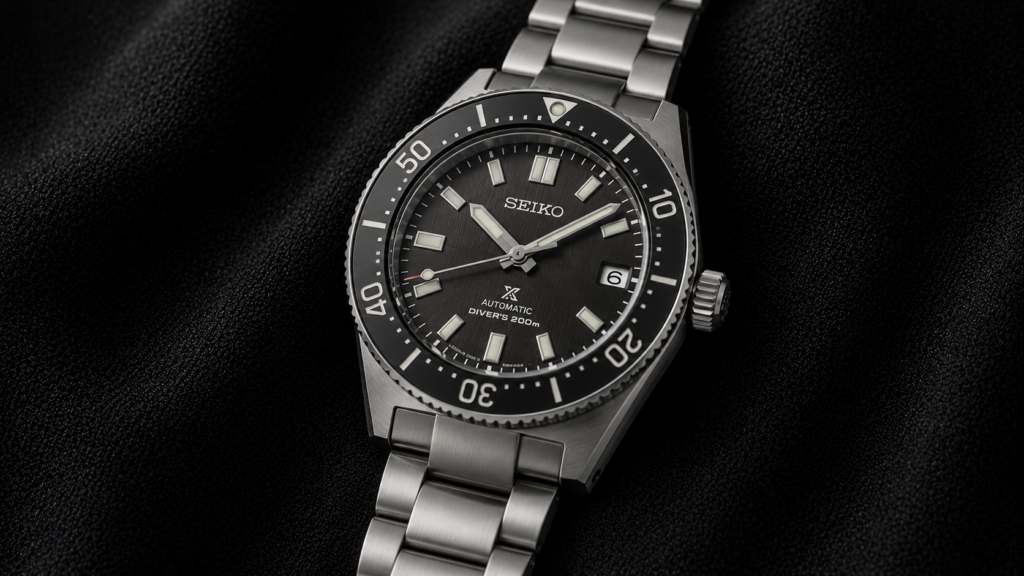
The SPB14X series, reissues of the 1965 Seiko 62MAS dive watch, has become the entry-level reference standard for serious mechanical dive watch collectors. The 6R35 movement offers a 70-hour power reserve. The 40.5mm case proportions are objectively better than most competitors in the price band. Discontinued references in the series have already shown appreciation on the secondary market. For a buyer with no existing watch position, the SPB14X is the most credible single-watch entry below £1,500.
6. Grand Seiko Snowflake SBGA211 (Pre-Owned)
Retail price: £5,500 to £5,800 new. Pre-owned market: £3,800 to £4,500.
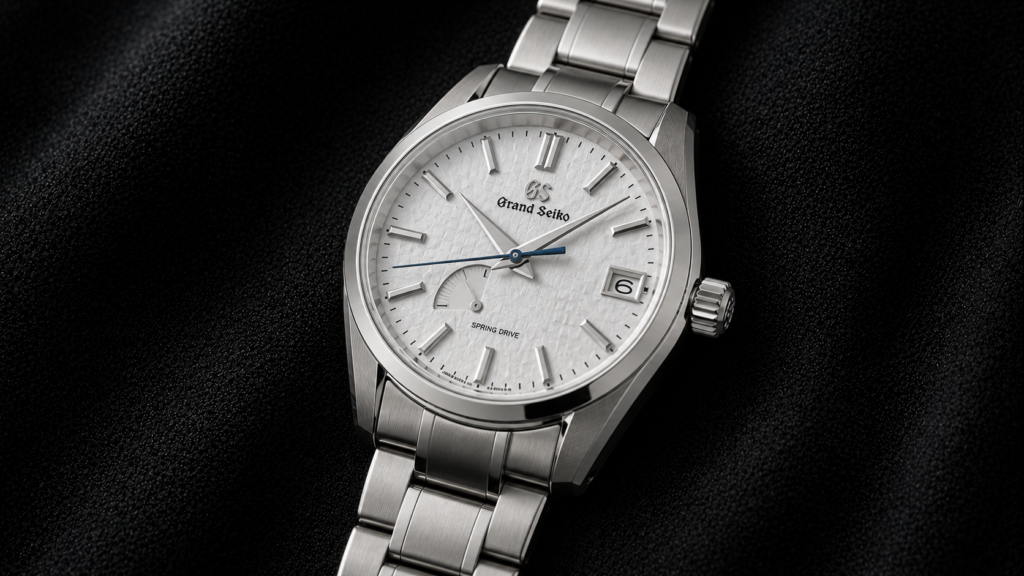
Pre-owned, the Snowflake enters the budget. The Spring Drive 9R65 movement, the Zaratsu-polished titanium case, and the textured “snowflake” dial constitute one of the most distinctive aesthetic packages in modern watchmaking. The SBGA211 has appreciated 9.0% over the past year and outperformed both the Grand Seiko brand index and the broader watch market index by 5.6% over five years. For an investor seeking exposure outside the Rolex/Omega/Tudor concentration that dominates this segment, Grand Seiko offers genuine diversification with measured upside.
Investment Returns by Price Tier
The performance distribution across the sub-£5,000 segment is heavily skewed by sub-segment, and understanding the breakpoints matters for allocation.
Sub-£1,500 tier. Returns are minimal in absolute terms. Most watches in this band depreciate 15% to 30% over a five-year hold. Liquidity is the constraint: there is volume below £1,000 but transaction friction is meaningful relative to the underlying asset value. The exceptions are reference-specific (Tissot PRX, certain Seiko Prospex configurations, vintage Hamilton field watches) where collector interest creates stable secondary pricing. Treat this tier as wearable asset with bounded downside, not as investment.
£1,500 to £3,500 tier. The middle band, where Longines, mid-tier Tudor, and entry Grand Seiko sit. Five-year depreciation typically 10% to 20%. Liquidity is acceptable (30 to 60-day median sale times). The economic case is preservation of approximately 75% to 85% of capital, plus the use value of wearing the watch for the holding period. For a five-year hold, the cost-per-wear arithmetic at this tier is generally compelling.
£3,500 to £5,000 tier. Tudor flagship references (Black Bay 58, Pelagos), pre-owned Omega Speedmaster Professional, pre-owned Grand Seiko Snowflake. This is where the segment becomes genuinely interesting. Liquidity tightens to 15 to 30-day medians. Value retention strengthens materially, with depreciation typically 10% to 18% over five years. Capital preservation at this tier is competitive with much higher price bands, and the absolute capital at risk remains manageable for most career stages.
The structural observation: the upper third of the sub-£5,000 segment captures most of the segment’s investment quality. Concentrating budget at the £3,500 to £5,000 tier outperforms spreading capital across multiple lower-tier acquisitions. For broader context on how this segment fits into a complete portfolio, see Watches as Alternative Assets in 2025: The Complete Investment Guide.
Where to Buy Under £5,000
The acquisition channel materially affects outcomes at this tier, perhaps more than at higher price points because the absolute spreads are proportionally larger.
Authorised dealers for new acquisitions. Watches of Switzerland (multiple London locations), Mappin & Webb, Goldsmiths, and Beaverbrooks cover the Tudor, Longines, Tissot, and Omega ranges. Grand Seiko’s London boutique on Conduit Street is the official channel. Authorised dealer purchases include manufacturer warranty and full documentation, both materially affecting resale value.
Pre-owned with authentication. Watchfinder & Co. offers institutional-grade authentication, warranty, and Richemont group backing. For sub-£5,000 acquisitions, the price premium over private sale is typically 10% to 15%, which is the cost of guaranteed authentication and immediate liquidity. For first-time buyers without specialist knowledge, this premium is defensible.
Chrono24 marketplace. The largest aggregated platform for pre-owned watches globally. Chrono24’s Trusted Checkout programme provides escrow protection and authentication. Pricing is closer to true market levels than dealer pre-owned, with the trade-off that buyer due diligence is more rigorous. For experienced buyers, Chrono24 offers the best price discovery in the segment.
Auction. Bonhams and Fellows in London hold regular sales that include sub-£5,000 lots. Hammer prices can run 20% to 30% below retail for desirable references, but buyer’s premium (typically 25% to 27% in London) materially erodes the discount. Auction acquisition in this segment makes sense for specific vintage or discontinued references rather than for current production watches.
Common Mistakes to Avoid
Five errors recur in this segment.
Buying fashion brands. Watches from fashion houses (regardless of price) carry brand premium without watchmaking content. They depreciate 50% to 70% from retail within twenty-four months. Recognisable fashion-brand watches at £2,000 to £4,000 are the worst depreciating assets in the segment.
Ignoring liquidity in favour of “deal” pricing. A discontinued or obscure reference acquired at 30% below market may save capital on entry but cost more on exit through extended sale times or distressed pricing. Liquidity matters more than price at this tier because the holding period dominates the return profile.
Grey market under £5,000 without authentication. Counterfeit risk is higher at this price band than at the very top of the market (counterfeiters focus on volume references where production scale supports authentication arbitrage). Tudor, Omega, and Rolex Submariner counterfeits are sophisticated enough that visual inspection is insufficient. Any private-party transaction in this segment without documented service history or institutional authentication is a meaningful risk.
Buying for appreciation when the data shows depreciation. Most watches at this tier do not appreciate over five-year holds. They depreciate slowly or hold value. Misframing the investment case (expecting Rolex sport-model returns at sub-£5,000 entry prices) leads to disappointment and forced selling at unfavourable prices.
Failing to keep documentation. The single highest-return action at this tier is preserving the original box, papers, warranty card, and service records. A proper watch box protects both the physical condition of the watch and its documentation, both of which directly affect resale value. The marginal cost is zero. The marginal resale value increment is 10% to 20%. Treat documentation as part of the asset.
Conclusion: The Smart Entry Point
The sub-£5,000 segment is not where watch fortunes are made. It is where watch judgment is developed. For the finance professional new to the category, an acquisition at this tier delivers three things: a wearable asset with predictable financial outcomes, exposure to the operational discipline of the watch market (dealer relationships, authentication, documentation, secondary market dynamics), and the foundation for subsequent acquisitions at higher capital commitments.
The optimal strategy is concentration rather than diversification at this tier. One Tudor Black Bay 58 or one pre-owned Omega Speedmaster Professional held with discipline outperforms three lesser watches purchased on impulse. Treat the first acquisition as the calibration purchase and let the experience inform what you build next.
For broader portfolio context on how this segment connects to the Rolex tier above it, see Rolex as a Store of Value: A Data-Driven Analysis. The progression from sub-£5,000 to multi-asset watch positioning is well-trodden ground, and starting it correctly is the difference between an asset class and an expensive hobby.
DialAndYield.com analyses luxury watches as alternative assets for finance professionals. All prices in GBP are indicative as of Q2 2026, sourced from UK authorised retailers and secondary market data. Secondary market performance data sourced from WatchCharts, Chrono24, and Watchfinder & Co.