How to Analyse a Watch Like a Private Equity Deal
Every watch purchase above £5,000 is an investment decision. Most people treat it like a consumer purchase: they research the aesthetics, compare dial colours, read a few forum threads, and hand over the money. A PE professional approaches the same decision differently. They want to know the entry multiple, the exit route, the downside case, and the ROIC over a defined hold period. The framework below is not theoretical. It is the same analytical process applied to acquisitions at my firm, adapted for the watch market. The difference in outcome, over a portfolio of purchases across a decade, is significant.
The PE Deal Framework Applied to Watches
In private equity, every acquisition begins with the same set of questions. What are we paying? What do we own? How do we create value? How do we exit, at what multiple, and over what timeline? The arithmetic is then tested against a base case, an upside case, and a downside case.
Applied to watches, the translation is direct.
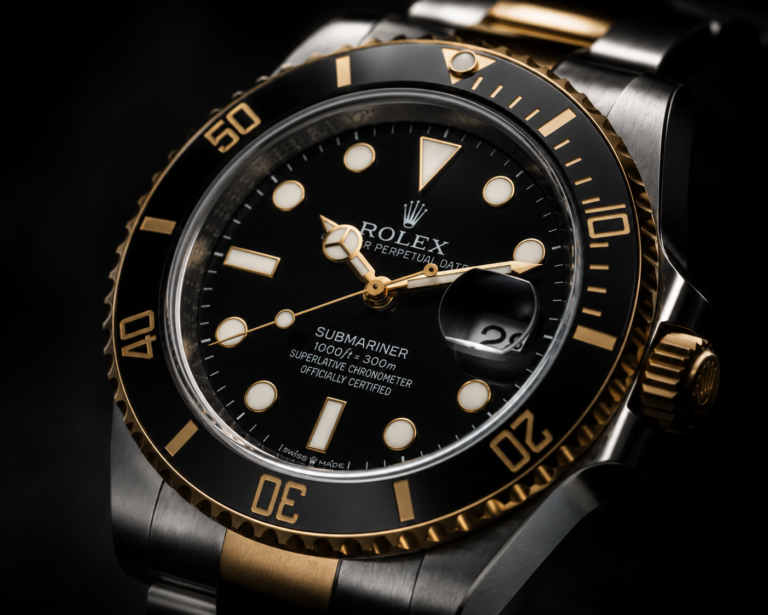
Entry price is what you pay, net of any premium over retail. Buying a Rolex Submariner 124060 at retail (£8,100) versus buying the same reference on the grey market at £10,500 is a 29.6% difference in entry cost. That differential compresses your return and extends your payback period materially. Every serious buyer should know the retail price, the current secondary market price, and the spread between them before any transaction.
Hold period is the minimum time before exit makes economic sense. Watches are not liquid equities. Transaction costs (dealer spread, platform fees, auction commission) typically run 10% to 20% round-trip. A watch that appreciates 12% over two years has returned approximately nothing after frictional costs. The minimum defensible hold period for most investment-grade watches is five years. Ten years produces a materially different return profile.
Exit strategy must be identified before purchase, not after. The exit routes are: authorised dealer trade-in (lowest return, highest convenience), pre-owned platform such as Watchfinder & Co. (institutional pricing, some discount to market), private sale via auction or marketplace (closest to market price, longest timeline), and specialist dealer (highest price for the right reference, narrowest buyer pool). Each route has a different liquidity-return trade-off, and the right choice depends on the reference, condition, and urgency.
ROIC is the total return on invested capital, calculated as exit proceeds minus entry cost minus holding costs (service, insurance, storage) divided by entry cost. A Rolex Datejust 41 purchased at retail in 2019 for £6,800 and sold in 2024 for £9,200 in full-set condition produces approximately 35% gross ROIC over five years, equivalent to roughly 6.2% annualised before holding costs. Modest by PE standards, but better than most liquid alternatives with comparable risk.
Due Diligence: What to Check Before You Buy
PE deal teams spend more time on due diligence than on deal origination. The same discipline applies to watches.
Reference research. Know exactly what you are buying before you look at a single listing. The reference number on a watch encodes the case material, dial configuration, bracelet type, and production generation. A Rolex Submariner 126610LN is not the same asset as a 114060, and the secondary market prices them differently. WatchCharts maintains five-year price histories for every major reference, with liquidity metrics (median days to sell, volume of transactions) that are directly analogous to trading data in public markets. Read this before any purchase above £5,000.
Authentication. The watch market has a counterfeiting problem that concentrates in the most liquid references: Rolex Submariner, Daytona, AP Royal Oak. Visual inspection is insufficient at this price point. Institutional channels (authorised dealers, Watchfinder & Co., Chrono24 Trusted Checkout) provide authentication as a service. Private transactions without documented provenance carry materially elevated risk, and no discount compensates for the possibility of buying a fake.
Condition assessment. Polishing removes metal and reduces collector value. An unpolished case with honest wear is worth more to a serious buyer than a polished case that looks new. Check for case sharpness (the edges on a Submariner or Royal Oak bezel should be crisp, not rounded), dial condition (no fading, no moisture, no refinishing), and crystal clarity. Movement service history matters for older references: an overdue service is a liability, not a reason to discount and proceed.
Documentation. Box and papers add 10% to 20% to secondary market value across all investment-grade references. This is one of the highest-return actions available: a zero-cost decision at purchase that materially affects exit proceeds. Store original boxes, warranty cards, hangtags, and service receipts in a dedicated watch storage box from day one. A proper watch box protects both the watches and the documentation that determines a significant portion of their value; a quality option is available here and is among the more capital-efficient purchases you will make alongside the watch itself.
Price comps. Before any transaction, run three data sources: the current retail price (if in production), the WatchCharts market price index for the specific reference, and five recent sold listings on Chrono24 filtered by condition and documentation status. If the asking price sits more than 10% above the average of recent comparables without a clear justification (rare dial variant, original bracelet, documented provenance), the deal is mispriced.
Valuation: How to Price a Watch Correctly
The correct methodology is comparable transactions, the same approach used for private company valuation where no liquid market price exists. The steps are precise.
First, identify the exact reference number, production year range, and condition tier (mint/full-set, excellent/complete, good/incomplete documentation). These are your valuation variables. A Rolex Submariner 126610LN in mint condition with box and papers is a different asset to the same reference in good condition without documentation, and the market prices them approximately 15% to 20% apart.
Second, pull the WatchCharts market price for the reference. The platform’s “market price” represents the median of recent verified transactions, adjusted for condition. It is the most reliable single data point available. Where WatchCharts shows the Submariner 124060 currently trading at approximately £9,500 to £11,000 in full-set condition, that range is your baseline.
Third, adjust for premia and discounts. Premia attach to: original bracelet (not replaced), unpolished case and bracelet, early production references for discontinued models, and unusual dial variants. Discounts attach to: missing documentation (10% to 20%), polished case, non-original bracelet, evidence of moisture damage, and upcoming service requirements.
Fourth, calculate the retail-to-secondary spread. A watch trading at 40% above retail on the secondary market is pricing in significant scarcity; a watch trading at 20% below retail is pricing in structural oversupply or weak brand equity. The spread is a signal about demand dynamics, and both extremes carry different risk profiles.
The Investment Thesis
Investment Memorandum: Luxury Watch Portfolio, Core Allocation
Thesis statement. A concentrated portfolio of investment-grade luxury watches (Rolex sport references, Patek Philippe dress and sport references, AP Royal Oak) offers a long-duration alternative asset position with the following characteristics: 8% to 12% compound annual return on a fifteen-year historical basis, exceptional liquidity for an alternative asset class (15 to 30-day median sale time for core Rolex references), low correlation to public equity markets, and zero management fee or carry. Entry multiple relative to replacement value is currently at or below 1.0x for most Rolex references following the 2022 to 2024 correction, representing the most attractive entry window in the past decade.
Upside case. Continued structural demand growth from emerging market collector bases (China, Middle East, Southeast Asia), Rolex’s historically consistent production discipline, and Patek Philippe’s controlled distribution maintain structural price support. References acquired today at or near retail in full-set condition return 25% to 40% MOIC over a seven-year hold in the base case, equivalent to a 3.2% to 4.9% IRR over the hold period net of transaction costs. High-conviction references (Rolex Daytona steel, AP Royal Oak Jumbo 15202ST) offer higher upside but require longer hold periods and greater liquidity tolerance.
Base case. Rolex sport models appreciate at 6% to 8% per annum over a five to ten-year hold, consistent with fifteen-year historical performance. Box-and-papers discipline adds 1.5 to 2 percentage points to effective ROIC at exit. Holding costs (service every five to seven years at £800 to £1,500 for Rolex; insurance at approximately 0.5% of value per annum) reduce net ROIC by approximately 1% to 2% annually. Net annualised ROIC in the base case: 5% to 7%. Not the return of a performing buyout, but comparable to investment-grade credit with superior optionality.
Downside case. A repeat of the 2022 to 2024 correction (15% to 30% decline from peak for sport references) applied to a position built at current prices produces limited absolute loss because current pricing already reflects the correction. Maximum drawdown in the downside case, applied to a diversified position across Rolex, Patek, and AP references, is approximately 10% to 15% of portfolio value. The position size that makes this acceptable within a total alternatives sleeve is 5% to 10% of liquid net worth.
For the detailed Rolex-specific analysis underpinning these return assumptions, see Rolex as a Store of Value: A Data-Driven Analysis. For the broader portfolio construction context, see Watches as Alternative Assets in 2025: The Complete Investment Guide.
Risk Assessment
Market cycle risk. The 2022 correction is the most instructive recent case study. From peak secondary market pricing in March 2022 to trough in early 2024, the Rolex Submariner declined approximately 11%, the Daytona approximately 13%, and the Patek Nautilus 5711 approximately 50%. The correction was predictable through a PE lens: the 2020 to 2022 run-up exhibited the hallmarks of speculative compression (new buyer cohorts, extended payment terms from grey market dealers, prices exceeding replacement cost multiples seen in prior cycles) that precede most asset corrections. A PE-trained analyst looking at a 5711 trading at $200,000 in early 2022 against a $35,000 retail price could reasonably have identified the premium as unsustainable. They would have been right.
Authentication risk. Concentrated in Submariner, Daytona, and Royal Oak references. Mitigated entirely by purchasing through institutional channels. The premium paid to Watchfinder, Chrono24 Trusted Checkout, or an authorised dealer over a private-party transaction is the cost of authentication insurance.
Liquidity risk. Reference-specific. The Submariner sells in fifteen days. A complicated independent maker’s piece may take three months. Portfolio construction should weight at least 60% of position value toward references with thirty-day median sale times.
Concentration risk. A portfolio of one watch is a concentrated single-asset position. A portfolio of five watches across three brands is diversified. Position sizing discipline (no single reference exceeding 40% of total watch portfolio value) reduces idiosyncratic downside.
Portfolio Construction and Exit
Build the position over time rather than deploying capital in a single transaction. The watch market, like any alternatives market, rewards patient deployment.
A sensible starting allocation for a finance professional at mid-career: one Rolex sport reference as the liquid core position (Submariner 124060 at retail, approximately £8,100), supplemented by one dress watch reference as a longer-duration store of value (JLC Master Ultra Thin at £8,200 to £10,000 or Patek Calatrava from £19,000). For buyers earlier in career building toward this position, pre-owned Rolex Submariner listings and pre-owned Tudor Black Bay listings offer entry points at lower capital commitment with documented liquidity. The sub-£5,000 entry point analysis is covered in full at Best Watches Under £5,000 for Investment.
Exit timing is a function of the same analysis applied at entry: where is the reference in its price cycle, what is the current secondary market liquidity, and what is the cost of remaining in the position versus redeploying the capital? The practical indicators of an exit window: secondary market price exceeds the five-year WatchCharts trend line by more than 20%, dealer premiums compress (indicating new supply entering the market), and media coverage of the reference reaches mainstream rather than collector audiences (a reliable leading indicator of peak sentiment).
Where to sell: Watchfinder & Co. for institutional pricing with guaranteed execution. Chrono24 marketplace for private-market pricing with a three to six-week transaction window. Auction (Christie’s, Sotheby’s, Bonhams, Phillips) for rare references where the buyer pool depth justifies the 25% buyer’s premium. The correct channel is determined by the reference, not by preference.
Conclusion: The Discipline Advantage
The watches that outperform over a ten to twenty-year hold are not the most beautiful or the most talked-about at the time of purchase. They are the ones that were bought with a clear investment thesis, held through the inevitable correction, and sold when the return profile justified exit rather than sentiment. That discipline is available to anyone who applies it. The PE framework simply makes it systematic.
Maintain the physical asset accordingly. Watches stored unworn lose power reserve and allow lubricants to settle; a quality watch winder keeps automatic movements running and in optimal mechanical condition between wears. A reliable option is available here. This is not a luxury. For a £10,000 to £50,000 asset, proper storage is part of the asset management discipline.
The advantage is not access, or capital, or a special relationship with an authorised dealer. The advantage is analytical rigour applied to a market where most participants behave like consumers. In private equity, that inefficiency is called an opportunity.
DialAndYield.com analyses luxury watches as alternative assets for finance professionals. All prices in GBP are indicative as of Q2 2026. Secondary market data sourced from WatchCharts and Chrono24. Return assumptions based on fifteen-year historical secondary market performance and do not constitute financial advice.