Rolex as a Store of Value: A Data-Driven Analysis
A store of value is, in any rigorous definition, an asset that preserves purchasing power across economic cycles without requiring active management. Gold has held that role for three thousand years; sovereign debt for three centuries; equities, residential real estate, and fine art for roughly one. Rolex has now joined that list. Over the past fifteen years, average Rolex transaction prices have appreciated roughly 550%, outpacing the S&P 500 total return and dwarfing the performance of gold over the same period. For finance professionals accustomed to evaluating alternative assets, the data warrants serious analysis rather than enthusiast commentary.
The Data Behind Rolex Price Performance
The most comprehensive dataset on Rolex price performance comes from the secondary market, where actual transaction values reveal market truth more reliably than retail price lists. According to fifteen years of sales data compiled across the major reference platforms (a useful starting point for any serious analysis is WatchCharts, which maintains transparent indices and historical price charts for every major reference), average Rolex transaction prices have risen from approximately $2,000 in 2010 to over $13,400 in 2025.
The collection-level breakdown is more revealing than the aggregate. The Datejust appreciated approximately 639% over the 2010 to 2025 window. The GMT-Master II appreciated 506%. The Daytona, despite its higher starting base, appreciated 358% and reached an absolute peak transaction price near $53,900 in March 2022. Even the Explorer, historically the entry-level Rolex sport watch, posted 357% appreciation over the same period.
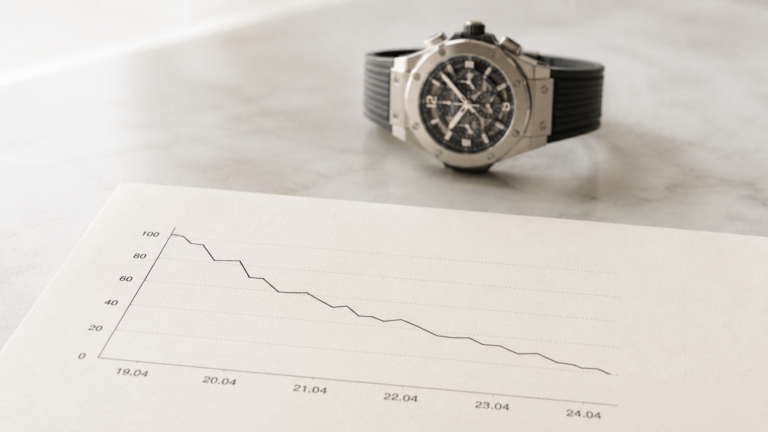
The five-year window provides a more relevant performance picture for current allocation decisions. The broader Rolex market peaked in spring 2022 and has since corrected. Over the past two years, GMT-Master prices fell 9.7%, Submariners 11.1%, and Daytonas 12.9%. However, zooming out to a five-year view, all three categories remain nominally positive. Certain Daytona references have posted compound annual growth rates as high as 35% over five-year windows, performance more typical of growth equities than wearable assets.
The CAGR calculation matters here. A 358% gross return over fifteen years equates to roughly 10.6% annualised. That figure compares favourably to the FTSE 100 total return over the same period and is competitive with broader US equity indices on a pre-tax, pre-fee basis. Watches incur no management fee, no carry, and no platform charge. The frictional cost is the transaction spread, which has compressed materially as the secondary market has institutionalised.
Why Rolex Holds Value Better Than Other Watches
The structural reasons Rolex maintains value where competitors do not are explainable through standard supply-side economics. Three factors compound.
First, controlled distribution. Rolex produces approximately one million watches per year, a volume that has remained essentially flat for over a decade despite demand growth of multiples. The brand allocates production to authorised dealers, who in turn allocate to clients based on purchase history. This is the textbook definition of a managed supply curve, and it functions identically to controlled-supply commodities in financial markets.
Second, brand depth measured by recognition. A Rolex is identifiable globally without expertise. This universal recognition removes the friction of authentication and education that limits liquidity in other luxury categories. A buyer in Singapore, Geneva, Dubai, or London can transact a Rolex within forty-eight hours at a defensible price. No other watch brand achieves this depth of global retail and resale infrastructure.
Third, the appreciation feedback loop. As Rolex prices rise on the secondary market, the brand has historically raised retail prices to compress the premium. This dynamic, observed continuously since 2018, creates a structural floor under secondary pricing. Rolex raised UK retail prices on multiple references in January 2026, with the Submariner No-Date moving from £7,150 to £7,500 and the Day-Date 40 in yellow gold absorbing a 6.4% increase. Every retail increase raises the floor under secondary market pricing for existing inventory.
The comparison with other luxury watch brands underscores the point. Patek Philippe and Audemars Piguet have outperformed Rolex on specific references (notably the Nautilus and Royal Oak), but on a portfolio basis Rolex has delivered superior liquidity and lower volatility. The broader watch market, ex-Rolex, has corrected more sharply since 2022.
The Best Rolex Models for Value Retention
Not all Rolex models are equivalent stores of value. The investment case concentrates in four references. (For real-time pricing on each, Chrono24 provides the largest aggregated marketplace and is the standard reference for pre-owned transaction prices.)
Rolex Submariner.
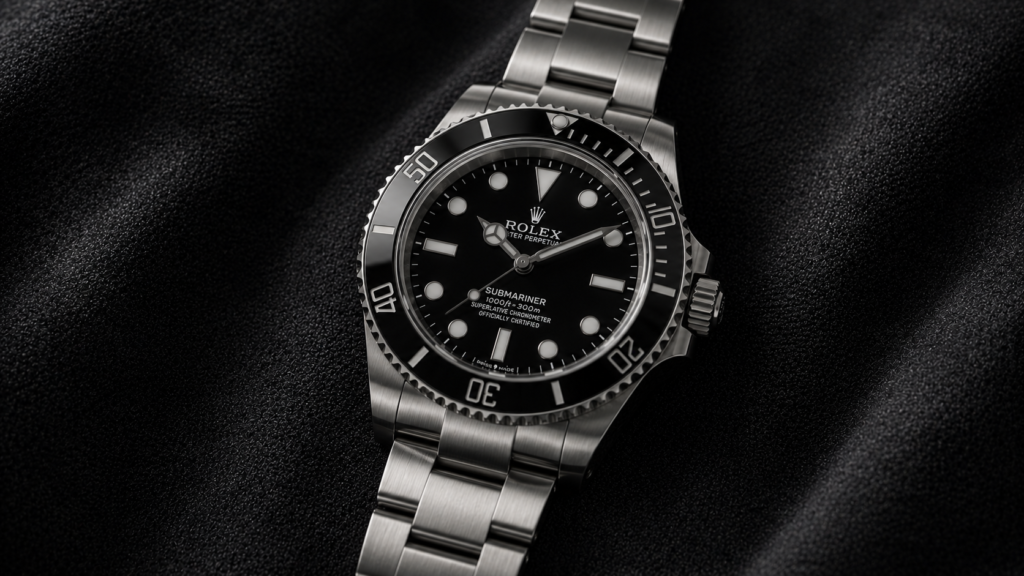
The current 124060 (No-Date) retails at £8,100 in the UK and trades approximately 5% above retail on the secondary market, with full-set examples in London fetching £10,250 to £11,650. The Submariner Date 126610LN retails at approximately £9,200 and has traded above retail for the entirety of its production run. For a deeper comparison of the Submariner against its closest competitor, see Tudor Black Bay 58 vs Rolex Submariner. Submariner reference data on Chrono24.
Rolex Daytona.
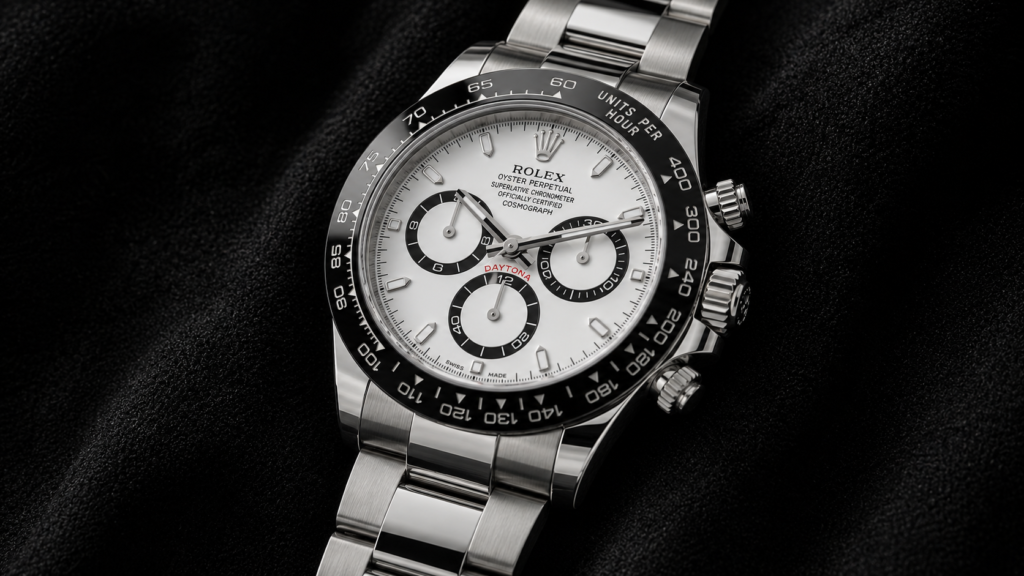
The current stainless steel reference 126500LN retails at £13,600 and trades comfortably above retail in the secondary market, with mint examples reaching £19,000 in 2024. The Daytona is the most demand-constrained Rolex sport watch in current production, with authorised dealer waiting lists extending two to eight years for non-VIP clients. Certain Daytona references have posted up to 35% CAGR over five-year periods. The Daytona is the most directly comparable Rolex to a high-conviction equity position.
Rolex GMT-Master II.
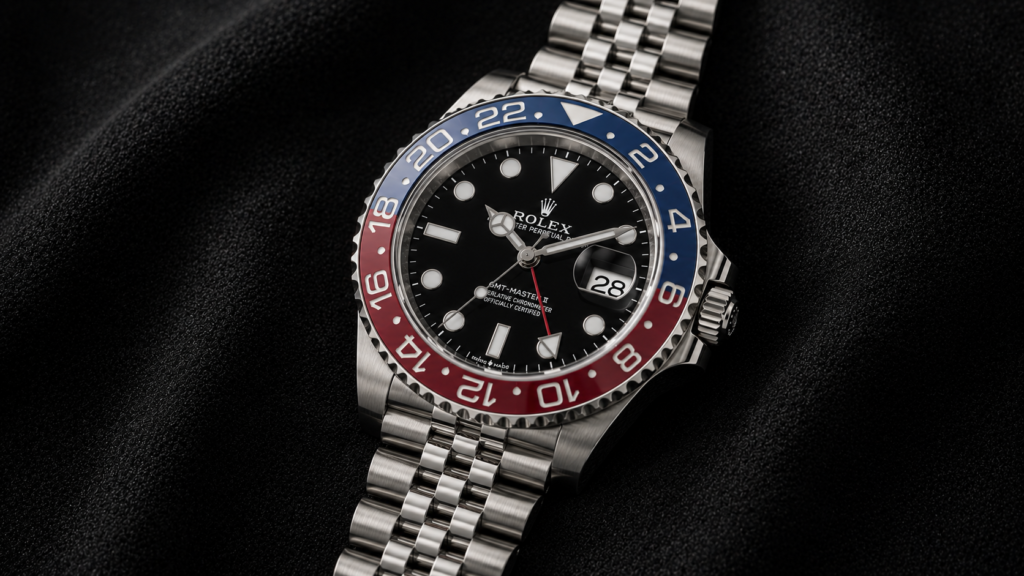
The “Pepsi” reference 126710BLRO carries a UK retail price of £9,850 and a current secondary market price of approximately £25,100, more than 2.5 times retail. The “Batgirl” 126710BLNR in steel with Jubilee bracelet trades at just below £20,000 against the same £9,850 retail base. Discontinuation speculation in early 2026 has further compressed grey market availability. The GMT-Master II represents the most extreme retail-to-secondary spread in the current Rolex lineup.
Rolex Day-Date.
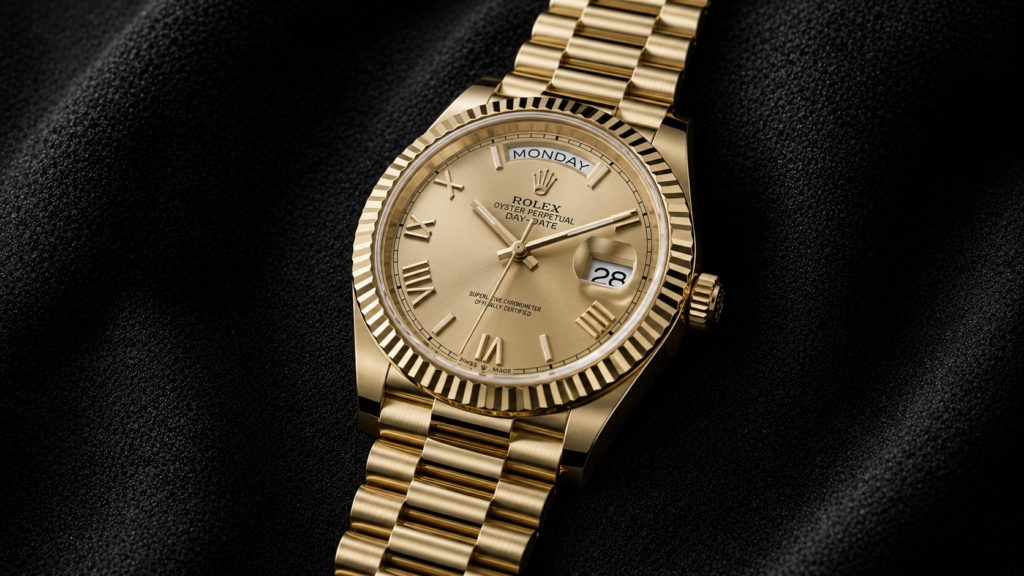
The Day-Date 40 in yellow gold (reference 228238) retails at approximately £35,000 to £37,000 and trades at comparable or modestly elevated prices on the secondary market. The Day-Date’s investment case is materially different from the steel sport watches: it functions as a precious metal allocation with timekeeping attached. Approximately 75% of the watch’s value is bullion content, which provides downside protection in correction cycles. The model has absorbed retail increases of 6% to 7% annually as gold prices have moved.
The common thread across these four references is global identifiability, controlled production, and a multi-decade track record of price retention. For institutional-grade pricing data and historical performance charts, WatchCharts maintains dedicated indices for each.
Rolex vs Other Stores of Value
Applying the same valuation framework I use for private equity allocation decisions, the comparison across asset classes is instructive.
Gold. The benchmark inflation hedge. Gold has compounded at approximately 8% annually over fifteen years. Rolex (on a portfolio basis) has compounded at over 10% over the same window. Gold offers superior liquidity and zero authentication risk; Rolex offers wearability and a structural scarcity premium. Both belong in a diversified store-of-value allocation. They are not substitutes.
Residential real estate. Prime central London residential property has compounded at approximately 3% to 4% annually over fifteen years, with materially higher transaction costs (5% to 7% round-trip versus 5% to 10% for a watch sold through an established dealer). The illiquidity is significant: prime residential takes six to eighteen months to transact, against fifteen to thirty days for a desirable Rolex reference. Rolex is the more capital-efficient instrument on a unit basis.
Equities. The S&P 500 total return has compounded at approximately 12% annually over the fifteen-year window. This exceeds Rolex on a portfolio basis. However, the equity comparison ignores tax treatment (UK capital gains on personal-use chattels worth under £6,000 is exempt; watches above that threshold remain taxable but on different lines) and ignores the use value of the asset. A watch generates psychic return that an index fund does not.
Fine art. The closest comparable. Art and watches share controlled supply, global liquidity at the high end, and the wearability/displayability of the asset. Art carries materially higher authentication risk, longer transaction times, and storage and insurance costs that Rolex does not. Rolex is the more accessible alternative asset class for the investor with under £500,000 of allocation capacity.
The honest conclusion is that Rolex sits as a complement, not a substitute, to traditional stores of value. A 5% to 10% allocation to luxury watches within a broader alternatives sleeve is defensible on the data. A 50% allocation is not.
How to Buy Rolex as an Investment in London
The acquisition channel materially affects the investment outcome. Three routes exist.
Authorised dealers. This is the optimal economic route. Watches of Switzerland operates across Old Bond Street, Regent Street, Knightsbridge, Royal Exchange, and Canary Wharf. Mappin & Webb maintains official Rolex retail presence at Regent Street and Old Bond Street. Harrods Fine Watch Room and Bucherer Covent Garden complete the authorised dealer roster. Authorised dealer purchases are made at retail price. For high-demand references, allocation requires a multi-year purchase history. For the Submariner No-Date and most Datejust configurations, walk-in availability is occasional.
Grey market. Pre-owned and unworn watches available through specialist dealers without authorised dealer constraints. The premium over retail varies by reference, currently 5% to 25% for in-demand sports models. For buyers prioritising immediacy over capital efficiency, grey market is rational. For long-term investment positions, authorised dealer acquisition remains superior economics.
Pre-owned through certified channels. Watchfinder & Co. is the institutional-grade option, with Richemont group backing, full authentication, and standardised warranty terms. Somlo London in the Burlington Arcade specialises in vintage references for serious collectors. For market pricing transparency before any purchase, Chrono24 provides aggregated marketplace data, and WatchCharts maintains historical price indices.
A note on documentation. Box and papers add 10% to 20% to secondary market value across every Rolex reference. Service history adds further premium for older pieces. Treat documentation as part of the asset from the day of acquisition.
Conclusion: The Investment Case
Rolex satisfies the technical definition of a store of value. The data supports it: fifteen-year compound returns competitive with equity indices, two-week median liquidity for desirable references, controlled supply that creates structural pricing support, and global recognition that removes friction at the point of sale.
The investment case is not that every Rolex appreciates. Datejust configurations trade near retail or modestly below. Recent corrections have removed 10% to 13% from sport model prices over two years. The case is that a thoughtfully constructed Rolex position, concentrated in four to five high-demand references and held over multi-year horizons, delivers store-of-value performance comparable to gold or prime real estate with materially better liquidity than either.
For finance professionals, this represents an alternative asset class that requires no manager, charges no fee, and delivers a use value that no other store of value provides. Bought with the discipline you would apply to any allocation decision (right reference, right channel, right documentation) Rolex earns its place in the alternatives sleeve of a serious portfolio.
The data is now sufficiently mature to evaluate this asset class rigorously. Whether to participate is a question of capital position and conviction. Whether the underlying performance justifies analysis is no longer in doubt.
DialAndYield.com analyses luxury watches as alternative assets for finance professionals. All prices in GBP are indicative as of Q2 2026, sourced from UK authorised retailers and secondary market data. Secondary market performance data sourced from WatchCharts, Chrono24, and Watchfinder & Co.