Audemars Piguet: Brand Guide & Investment Analysis (2026)
When the conversation turns to watches as investment, three brands come to mind: Rolex, Patek Philippe, and Audemars Piguet. The lived experience matters when evaluating AP, because the brand occupies a position that data alone does not fully explain. Rolex offers accessibility and structural liquidity. Patek Philippe offers terminal prestige and the deepest collector market in modern watchmaking. AP sits in the narrow corridor between them: smaller production than Rolex, lower entry pricing than the top of the Patek hierarchy, and a Royal Oak collection that goes head-to-head with the Patek Nautilus in the integrated-bracelet luxury sports watch category Gerald Genta defined. For the finance professional considering an allocation outside Rolex, AP demands serious analysis.
The AP Story: From Le Brassus to Mayfair
Audemars Piguet was founded in 1875 in Le Brassus, in the Vallée de Joux, by Jules Louis Audemars and Edward Auguste Piguet. The Vallée de Joux matters here: it is the Geneva-adjacent horological corridor that also produced Patek Philippe’s manufacturing base and the early independent watchmaking tradition that defines the Swiss high-end today. AP has remained continuously family-owned through five generations, one of only a handful of major Swiss houses never to have been absorbed into a luxury conglomerate. That independence affects allocation discipline, brand strategy, and (importantly for investors) supply control.
Annual production sits at approximately 56,000 to 57,000 watches in 2025 and 2026. For context, Rolex produces approximately one million watches annually and Patek Philippe approximately 70,000. AP is the smallest of the three by a meaningful margin, and the brand has stated repeatedly that it has no intention of meaningfully scaling production. That production discipline is the foundation of the secondary market case.
The defining moment came in 1972. AP commissioned Gerald Genta, the most consequential watch designer of the twentieth century, to create a sports watch in stainless steel. Genta sketched the design in a single night, drawing inspiration from a traditional diver’s helmet. The result was the Royal Oak: an octagonal bezel with eight exposed hexagonal screws, an integrated bracelet, a textured “Tapisserie” dial, and a stainless steel case priced at the same level as gold dress watches from competitors. The watch was initially met with industry confusion. Within a decade it had reshaped luxury watchmaking entirely, and every integrated-bracelet sports watch produced since (the Patek Nautilus most directly, plus the Vacheron Overseas, IWC Ingenieur SL, and countless others) traces its lineage to Genta’s drawing.
The Royal Oak Offshore launched in 1993, the Royal Oak Concept in 2002, and the Code 11.59 collection in 2019.
The Royal Oak Jumbo: The Reference That Defined Luxury Sports Watches
Any serious analysis of AP must give weight to the Royal Oak “Jumbo” Extra-Thin. The Jumbo designation refers to the original Royal Oak case dimensions: 39mm diameter, ultra-thin profile (now 8.1mm), and the unmodified Genta proportions from 1972. It is the purest expression of the design that built the brand.
For two decades, the relevant reference was the 15202ST in stainless steel, powered by the Calibre 2121, one of the thinnest automatic movements ever produced. AP retailed the 15202ST at approximately £22,000 to £24,000 in the years before its discontinuation. In 2022, AP discontinued the 15202 and replaced it with the 16202ST, which retains the 39mm Jumbo proportions but houses the new Calibre 7121 movement. The current 16202ST retails at approximately £30,000 to £32,000 in the UK (US RRP $40,100). This transition is the most consequential event in the recent AP investment story.
The discontinued 15202ST is now the focal reference for AP investment. Secondary market pricing varies materially by dial colour. Blue dial (the most iconic configuration, reference 15202ST.OO.1240ST.01) trades at £35,000 to £45,000 for full-set examples in good condition. Grey “Petite Tapisserie” dial variants trade similarly. White dial 15202ST.OO.0944ST.01 examples reach £50,000 to £60,000. The 50th Anniversary blue dial in box-and-papers condition has traded above £55,000. Current secondary pricing on Chrono24 reflects significant variation by year, condition, and provenance.
The investment case rests on three pillars. First, the reference is permanently discontinued and powered by a movement AP has stated it will not return to. Second, AP’s production discipline means the global installed base is structurally limited. Third, the watch has performed counter-cyclically over recent windows: the 15202ST is up 12.2% over the past year against the broader AP brand index up 5.9%, suggesting collector demand for the discontinued reference is strengthening even as the broader watch market has corrected.
The five-year picture warrants honesty. The 15202ST is down 22.2% over five years from its 2022 peak, when speculation drove pricing well above $80,000. That correction was the inevitable mean-reversion from a speculative bubble, not a reflection of underlying value. The watch has stabilised in 2025 and 2026 at levels I assess as a defensible entry point for a multi-year hold.
The Full Royal Oak Investment Hierarchy
Beyond the Jumbo, the AP Royal Oak portfolio falls into a clear investment hierarchy. Pricing data on each reference is available on WatchCharts, which maintains dedicated indices for the Royal Oak and Royal Oak Offshore collections.
Royal Oak Selfwinding 41mm (Reference 15500ST, succeeded by 15510ST).
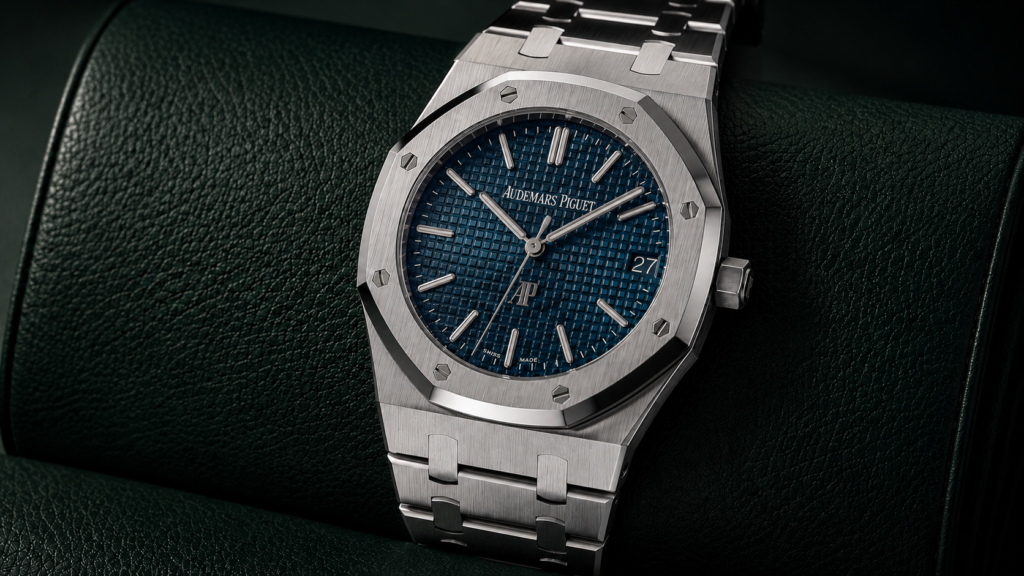
The larger sibling of the Jumbo, with a date display and the Calibre 4302 movement. UK retail approximately £25,000 to £27,000. Secondary market currently around £28,000 to £34,000 depending on dial. The 15500ST is the entry point to the modern Royal Oak collection and the reference most buyers acquire when the Jumbo is unavailable through dealer relationships. Investment case is solid but materially weaker than the Jumbo: less scarcity, larger production volume, and proportions that depart from the Genta original.
Royal Oak Offshore Chronograph 42mm (Reference 26238).

The sportier 42mm chronograph variant. Steel models retail around £30,000 to £35,000, with secondary market pricing typically £30,000 to £45,000. The Offshore has its own dedicated collector base but appeals to a different buyer than the Jumbo. Investment case is reasonable for specific limited and special editions, weaker for current production steel references where the depreciation curve mirrors retail more closely.
Royal Oak Offshore Diver (Reference 15720ST and successors).

Retail £22,000 to £25,000. Secondary market typically trades at or modestly above retail. A reasonable acquisition for a buyer who specifically wants this configuration, not a strong standalone investment case.
Code 11.59 collection.
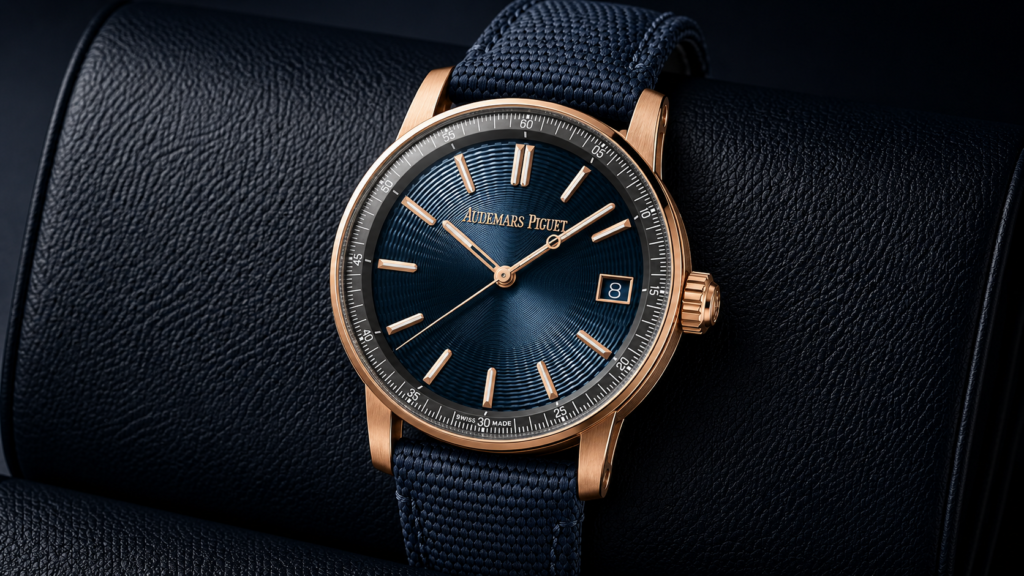
Launched in 2019 as AP’s modern round-cased collection. Time-only Code 11.59 Automatic retails approximately £25,000 in the UK. Secondary market pricing generally tracks at or modestly below retail. The Code 11.59 has not gained meaningful collector traction in its seven-year history and is the reference category I would actively avoid for investment purposes. The retail-to-secondary ratio is the worst across the AP catalogue, and the resale market is thin.
Precious metal Royal Oaks.

Yellow gold, rose gold, white gold, and platinum 15202 and 16202 references retail at £55,000 to £85,000. Secondary pricing varies enormously by configuration. The 15202IP titanium-and-platinum limited (250 pieces) currently trades at £85,000 to £150,000. Precious metal Jumbos hold value structurally well because they combine the Jumbo scarcity premium with intrinsic metal content, but liquidity tightens at higher price points.
AP vs Rolex vs Patek Nautilus: Where Does the Money Go
The cross-brand comparison resolves cleanly across three dimensions: return profile, volatility, and liquidity. For broader context on Rolex’s specific store-of-value characteristics, see Rolex as a Store of Value: A Data-Driven Analysis, and for the broader alternative asset framing, Watches as Alternative Assets in 2025: The Complete Investment Guide.
The most analytically interesting comparison is between the AP Royal Oak and the Patek Philippe Nautilus, because they are not just rivals but architectural relatives. Genta designed both. Both pioneered the integrated-bracelet luxury sports watch category. Both occupy the same wrist position in the same wardrobe. The investor choosing between them is making a comparable bet on different houses.
The Patek Nautilus story.
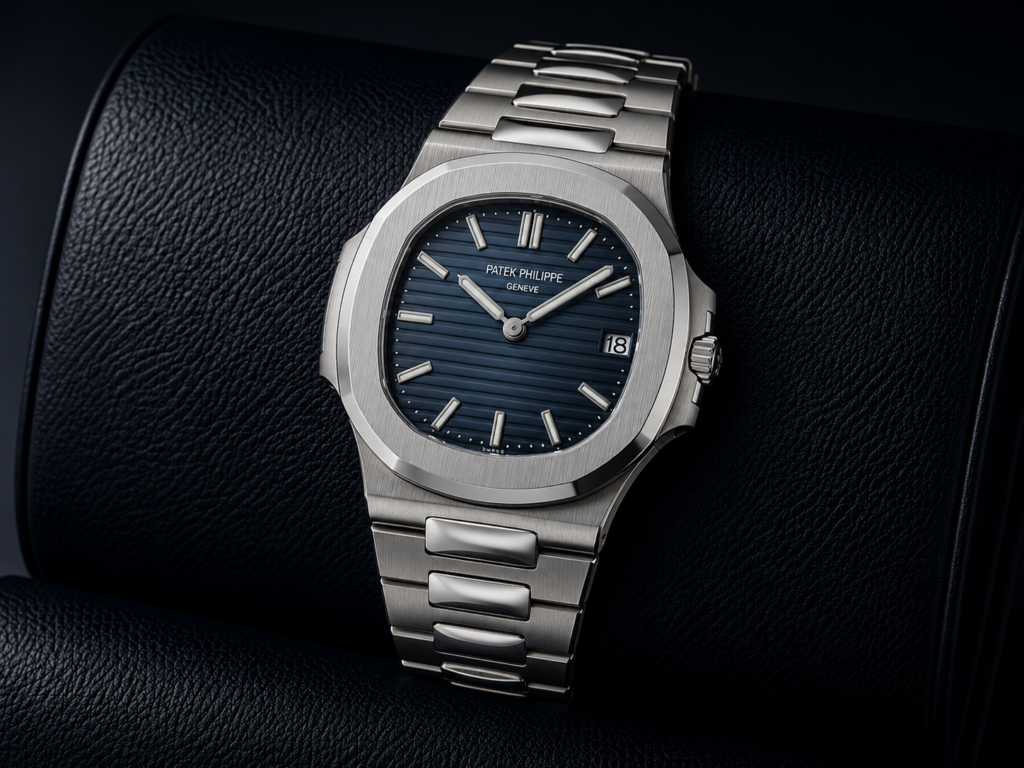
The reference 5711/1A in steel, discontinued in 2022, currently trades at approximately $100,000 to $160,000 (£80,000 to £128,000) against its final retail price of roughly $35,000. The watch corrected sharply from its 2022 peak, where it traded near $200,000 at the height of the speculation cycle, before stabilising at current levels. The successor reference, the 5811/1G in white gold, retails at $89,767 (approximately £71,000) and trades on the secondary market at $145,000 to $175,000 (£115,000 to £140,000). The 5811/1G is up 10.1% over the past year, outperforming both the broader Patek index and the Nautilus collection average. Critically, the 5811/1G shows volatility of 5.7%, lower than 94% of qualifying watches in the database, meaning the pricing is unusually stable for an asset trading at substantial premium to retail.
Return profile. Over fifteen-year windows, Rolex has delivered approximately 10.6% compound annual returns on a portfolio basis. AP Royal Oak references over comparable windows have delivered higher absolute returns but with materially greater volatility. The Patek Nautilus has delivered the highest peak returns of the three but also the sharpest drawdowns: the 5711 declined approximately 50% from its 2022 peak before partial recovery. AP sits between Rolex (lower volatility, lower returns) and Nautilus (higher volatility, higher peak returns) in the return-risk space.
Liquidity. Rolex maintains the deepest global liquidity. The Patek Nautilus 5711/1A is exceptionally liquid for its price point (median 30 days to sell, top 1% of Patek watches by popularity). AP Jumbo references are excellent within their tier but materially behind the Nautilus on transaction velocity. For a forced-sale scenario, Rolex is the highest-confidence asset; the Nautilus is the most liquid asset at its price point; AP Jumbo references trade well but with thinner depth.
The Nautilus-Jumbo choice in practical terms. The Nautilus 5711/1A at £100,000-plus secondary is materially more expensive than the AP 15202ST at £35,000 to £55,000. The Nautilus has broader brand recognition, deeper secondary market liquidity, and a higher absolute peak return potential. The Jumbo has a more disciplined price stability profile, a lower entry point, and (in my view) a more refined wearing experience. For an investor whose primary objective is capital appreciation in the £100,000-plus segment, the Nautilus is the stronger bet. For an investor seeking an integrated-bracelet steel sports watch with serious investment characteristics at £40,000 to £50,000, the Jumbo is the answer.
The portfolio implication: AP and Patek Nautilus are partial substitutes, not complements. Holding both is plausible only in a watch portfolio of significant size where the differentiation is between specific references (a 15202ST grey-dial plus a 5712/1A moon phase, for instance) rather than overlap.
The AP Investment Framework
Five rules apply to AP allocation.
First, the post-2022 correction has created a defensible entry window. The 15202ST is currently trading 30% to 35% below its 2022 peak and 12% above its 2024 trough. The market is in a recovery phase. Buyers acquiring now are entering at substantially more rational pricing than 2021 and 2022 cohorts.
Second, concentrate in Royal Oak references. The 15202ST (discontinued), 16202ST (current production), and 15500ST/15510ST together account for the great majority of the defensible AP investment case. Diversification across the broader collection is not a strength here.
Third, prefer earlier 15202ST production years over post-2022 examples. The 2005 to 2019 production window represents the most stable pricing and most established collector base. The final 2021 and 2022 production years carry pricing premium due to “last of the line” sentiment but also greater downside if that sentiment compresses.
Fourth, holding period must be a minimum of five years and ideally ten. AP Royal Oak pricing exhibits multi-year cycles. Shorter holding periods invite exposure to drawdown risk that the structural investment case does not compensate.
Fifth, the exit strategy matters. Sell through AP House for the highest pricing, Watchfinder & Co. for institutional-grade liquidity with documented warranty, or specialist dealers for private-market transparency. Auction is appropriate for special configurations and limited editions but adds 25% buyer’s premium and multi-month transaction windows.
Where to Buy Audemars Piguet in London
AP House London relocated in early 2026 from New Bond Street to 9 Clifford Street in Mayfair, a Grade II-listed townhouse dating from 1719. The new space spans approximately 10,000 square feet across four floors with a 1,400-square-foot rooftop terrace overlooking Mayfair, an order-of-magnitude upgrade from the previous single-floor Bond Street location. The street itself is well-chosen: Clifford Street runs from the Patek Philippe Salon and Louis Vuitton flagship on Bond Street at one end to Savile Row at the other.
The AP House concept is deliberately not a retail boutique. It functions as a private-client environment with client-only access to upper floors, a 360-degree “watch cellar” display inspired by whisky distilleries, a professional kitchen for private dining, and curated programming around music and contemporary art. Daniel Compton runs the UK operation. The model is built around relationship cultivation rather than transactional retail, which is the precise dynamic that controls allocation of Jumbo and other in-demand references. AP also opened AP House Manchester in 2025 as a joint venture with Watches of Switzerland Group, providing a second UK access point.
Authorised dealer access in London outside AP House is limited. Watches of Switzerland operates AP corners at select locations, and Harrods Fine Watch Room carries AP inventory. Allocation for Jumbo references at any authorised channel requires existing purchase history.
For pre-owned acquisition, Watchfinder & Co. is the institutional-grade option, with Richemont group backing and standardised authentication. Somlo London in the Burlington Arcade handles vintage and rare AP references for serious collectors. Chrono24 provides the deepest aggregated pre-owned marketplace globally, with Trusted Checkout escrow protection. For the 15202ST specifically, pre-owned through Chrono24 or Watchfinder is currently the only realistic acquisition channel.
Auction acquisition through Phillips, Christie’s, Sotheby’s, and Bonhams is appropriate for vintage Royal Oak references (the original 5402ST regularly trades above £80,000 at auction) and for limited editions with established provenance.
Conclusion: Is AP Worth the Premium in 2026?
The honest answer is: yes, but conditionally.
The Royal Oak Jumbo, acquired at current pricing of £35,000 to £55,000 depending on reference, dial, and condition, represents one of the strongest concentrated investment cases in modern luxury watchmaking. The reference is discontinued, the production base is finite, the design history is foundational to the entire luxury sports watch category, and the post-2022 correction has compressed pricing to a level that supports a defensible five-to-ten-year hold.
The Royal Oak Jumbo is not, however, the only credible option in the integrated-bracelet sports watch category. The Patek Nautilus 5711/1A at £80,000-plus secondary delivers a more liquid asset with stronger brand recognition, at the cost of materially higher entry price and a more volatile drawdown profile. The choice between them is genuine and reasonable in either direction. An investor with £50,000 to deploy should buy the AP Jumbo. An investor with £100,000-plus seeking the most liquid integrated-bracelet asset should consider the Nautilus seriously.
The case for the broader Royal Oak collection beyond the Jumbo is weaker but still positive. The 16202ST current production Jumbo and the 15500ST/15510ST 41mm references are solid acquisitions with secondary market support. The Offshore collection is reasonable but more dependent on individual reference selection. The Code 11.59 collection should be excluded from any investment-oriented analysis.
For a finance professional building a watch portfolio of meaningful size, AP earns its place alongside Rolex and Patek as part of the institutional-grade allocation. Buy the Jumbo, hold it, wear it. The data, the heritage, and the lived experience all support the same conclusion.
DialAndYield.com analyses luxury watches as alternative assets for finance professionals. All prices in GBP are indicative as of Q2 2026, sourced from UK authorised retailers and secondary market data. Secondary market performance data sourced from WatchCharts, Chrono24, and Watchfinder & Co.