The Best Watches for Women in the Corporate World: Signal, Style and Investment
The watch market has treated women as accessories buyers for too long. Publications that cover watches seriously write for men. Publications that write for women treat the purchase as a lifestyle decision rather than a financial one. This guide exists because neither serves the woman who understands that a watch is a capital allocation decision with a professional signal attached. Both dimensions matter. Both are addressed here.
The Signal Problem
Every professional environment runs on unspoken codes. Finance, tech, law, consulting, banking, the C-suite: the more senior the room, the more fluent everyone in it is at reading non-verbal information, and the watch you wear is among the first signals processed. For male colleagues, there is a reasonably well-mapped framework: sport Rolex at certain levels, dress watch at others, independent makers for the horologically literate. For women, that framework has never been written down, which means most people navigate it alone and by trial and error, usually after at least one expensive mistake.
The double standard is real, and navigating it is more useful than resenting it. A heavily jewelled piece in a board presentation communicates that you have not calibrated the room, however unfair that reading is. An oversized men’s reference worn to be taken more seriously communicates insecurity about being taken seriously, which achieves the opposite of the intended effect. The wrong watch does not lose you a promotion. But it adds friction you did not need in a context where friction accumulates.
The productive framing is this: dress for the room you are walking into, not the room you wish existed. A watch that works in every context is not a compromise; it is a precision instrument. The goal is to choose something that communicates judgment, that holds or builds value over time, and that does not require explanation to justify. If you are defending the watch in your own head, you have bought the wrong one.
The watches that work for women in corporate environments share three characteristics. They are legible as serious without being imitative of men’s choices. They are correctly proportioned for a smaller wrist without being trivialised by their scale. And they carry enough brand depth or design heritage that they can be defended intellectually, not just aesthetically, in a room full of people who evaluate assets for a living.
The Classics That Never Fail
Cartier Tank Must and Tank Louis Cartier (from £3,000 to £10,000+)
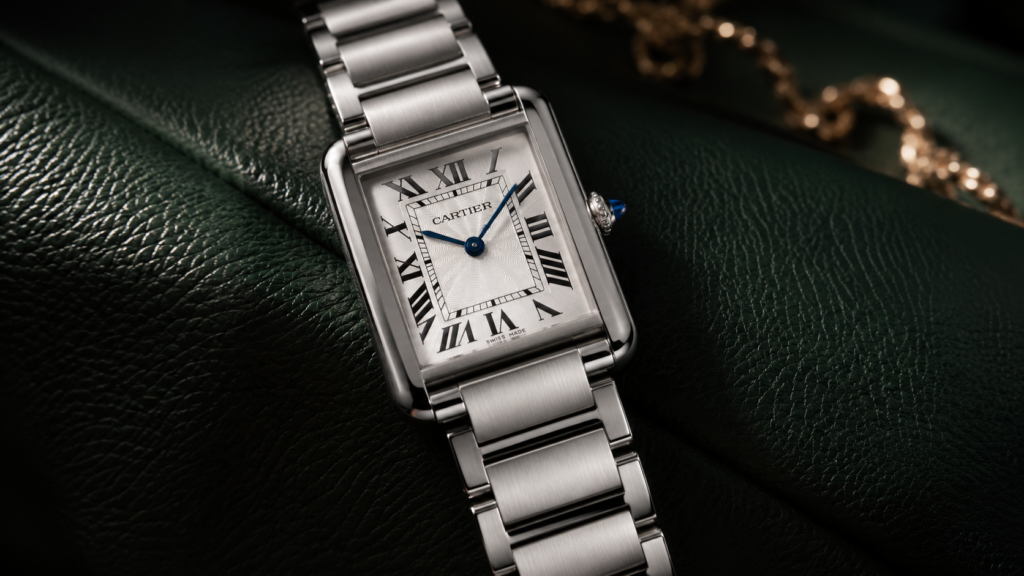
The Tank is the most precisely correct starting point for this conversation, not because it is the safest choice but because it is the most strategically sound one. Designed in 1917 by Louis Cartier, inspired by the aerial view of a Renault FT tank on the Western Front, worn by Jackie Kennedy, Diana Princess of Wales, Michelle Obama, and every significant woman in professional public life for the past century: the Tank carries a design heritage that makes “fashion watch” an embarrassingly inadequate description. The Tank Must in steel starts at approximately £3,000 retail and moves through to the Tank Louis Cartier in gold at £10,000-plus. In a corporate context, the Tank says something specific: I am not trying to out-Rolex anyone. I am wearing something they cannot wear as well as I can. That is a materially stronger signal than imitation. Pre-owned Tank Must references hold within 5% to 15% of retail and are available with full authentication on Watchfinder & Co.
Cartier Panthère de Cartier (from £5,500 in steel, £15,000 to £30,000+ in gold)
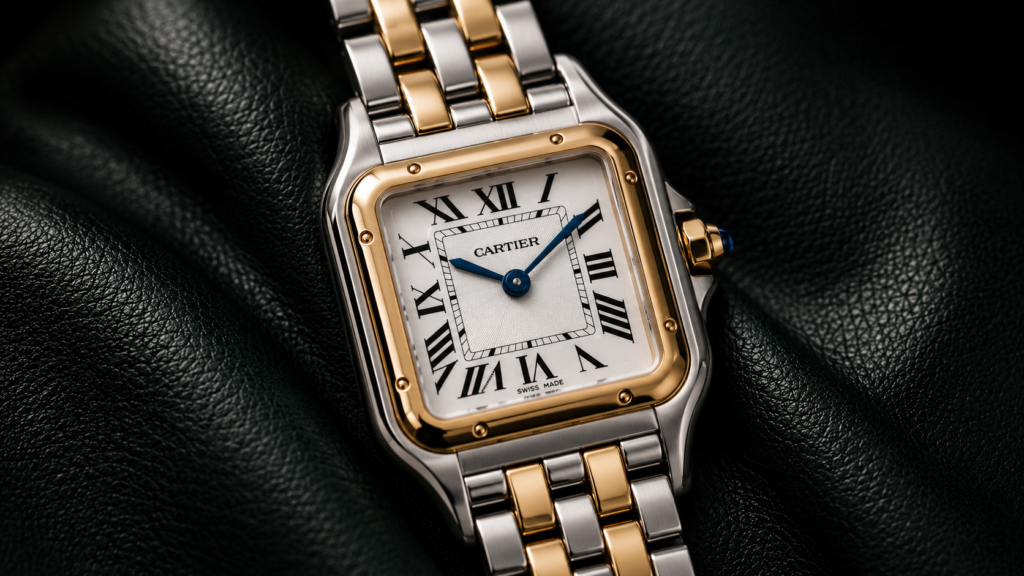
The Panthère is simultaneously the most underanalysed investment case in women’s watchmaking and the most distinctive professional watch available at its price point. First launched in 1983, discontinued in 2004, and relaunched in 2017: this discontinuation gap created genuine scarcity for vintage references while the modern relaunch lifted demand across the entire line. The data on the current production small steel reference (WSPN0006) is more compelling than most men’s watches in the same price bracket: 31.8% appreciation over five years, outperforming the WatchCharts Cartier brand index by 29.3 percentage points, with a median time to sell of just 7.5 days (faster than 91% of watches on the market). Pre-owned steel examples trade at £3,300 to £6,700; diamond-set versions reach £10,000; two-tone gold configurations extend to £24,000. Vintage 1980s references in precious metals with original documentation have sold above $30,000 at auction. The signal in a professional context is strong and distinctive: the Panthère is confident without being competitive. Browse current inventory on Chrono24.
Rolex Lady-Datejust 28 (from £5,500 in Oystersteel)
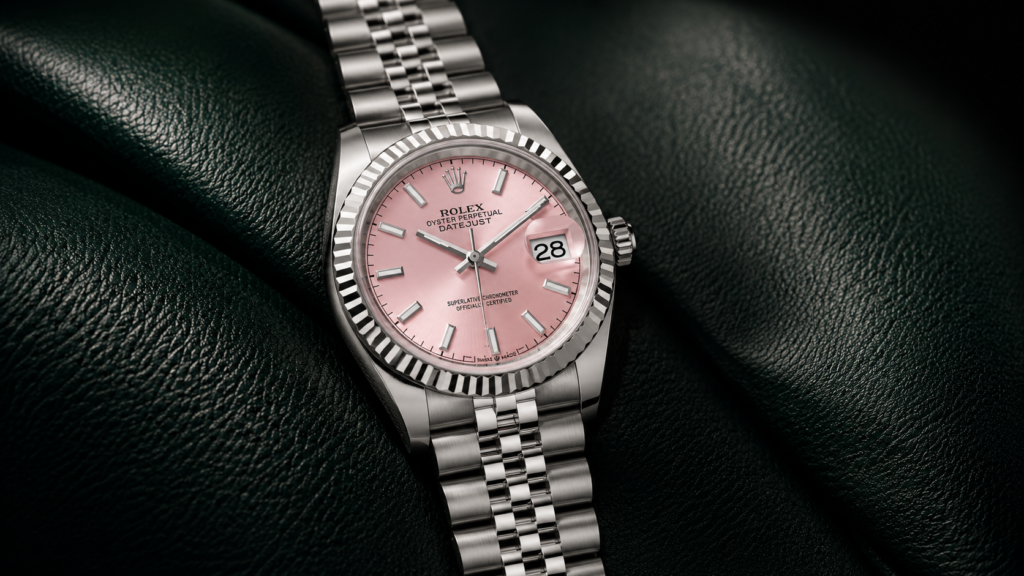
Rolex’s structural secondary market advantages in a correctly proportioned case. The Lady-Datejust in Oystersteel with a clean white or slate dial is the most defensible daily professional watch on this list: universally recognised, minimal depreciation in steel configurations, and backed by the most liquid secondary market in watchmaking. Current pre-owned steel references trade between £5,500 and £8,000 for clean full-set examples. The Datejust 31, technically unisex, extends to £12,000 for two-tone Rolesor configurations and works well as a bridge between women’s and midsize sizing.
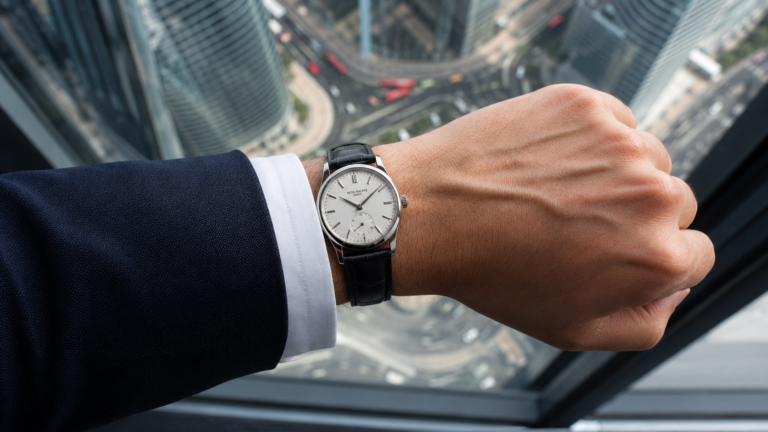
Patek Philippe Calatrava Ladies (from £18,000)
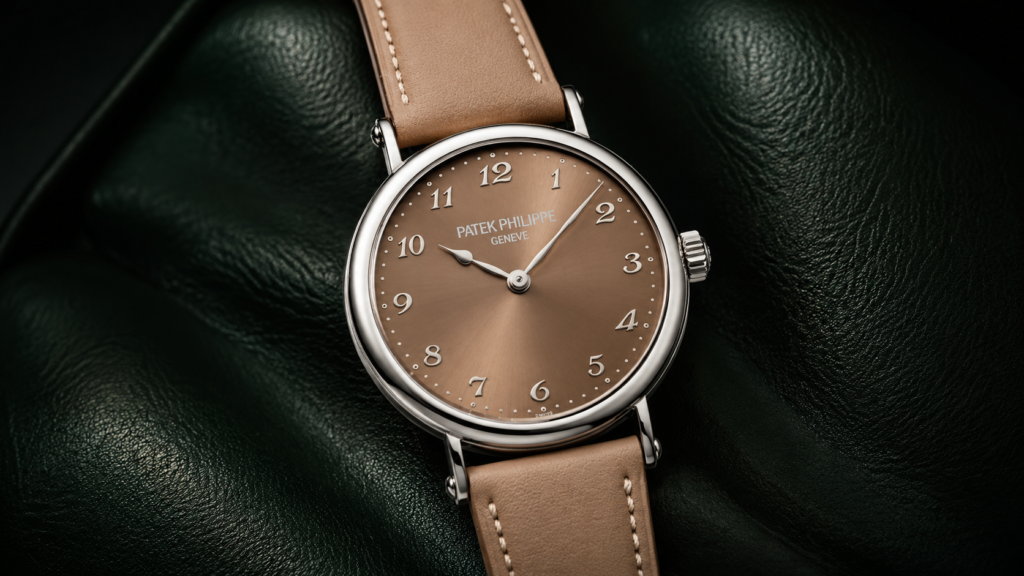
The terminal point of the dress watch tradition, women’s edition. The 33mm references in rose gold and white gold communicate one thing without ambiguity: you have stopped needing to prove anything, which is the most powerful professional signal available. Select Calatrava references trade 5% to 15% above retail in full-set condition; Patek’s controlled distribution and consistent retail price increases create the same structural secondary market floor as the men’s collection. This watch is for directors, partners, and C-suite appointments. It reads as presumptuous five years earlier than it should be worn.
Jaeger-LeCoultre Reverso One (from £8,500 in steel, £14,000+ in gold)
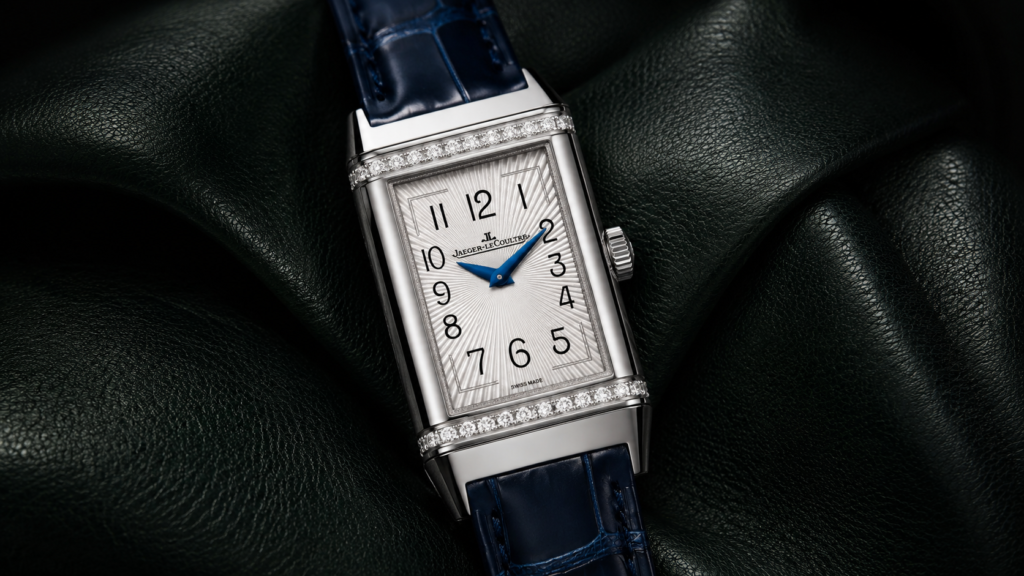
The Reverso One is the most technically singular watch on this list. A 1931 design created for polo players who needed to pivot the case to protect the dial: the physical reversal is not a gimmick, it is the entire concept, and it has no equivalent in modern watchmaking. The women’s Reverso One (28.2mm) reads as genuine horological interest rather than brand recognition. In finance, consulting, and law specifically, it signals that you have done your research on something that is not your job, which is the most valuable signal of all. Available at retail from the JLC boutique on New Bond Street; pre-owned on Watchfinder & Co.
Beyond the Classics: Watches Worth Knowing
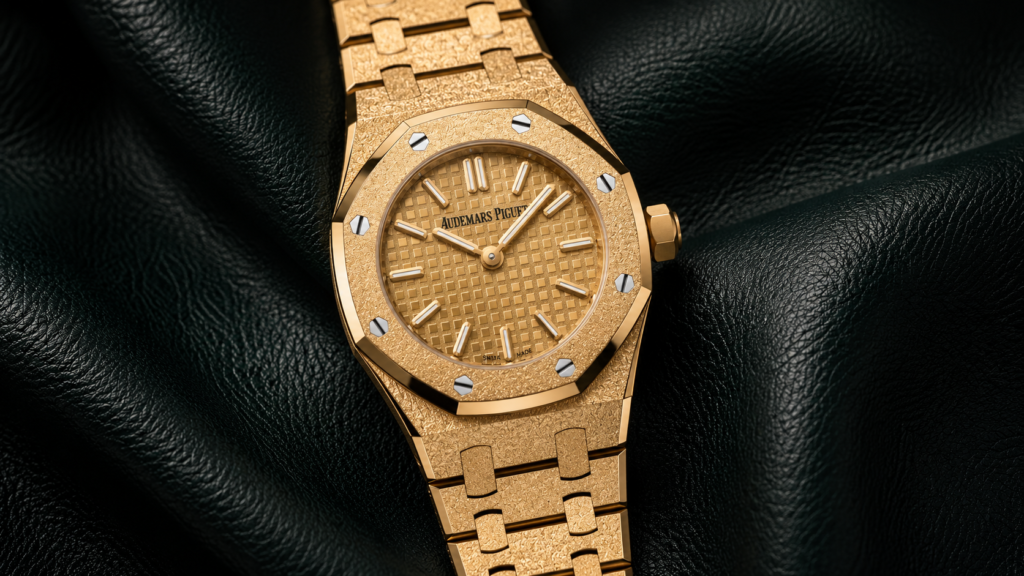
Audemars Piguet Royal Oak Mini Frosted Gold 23mm (retail from approximately £27,000 to £30,000; secondary market £70,000 to £90,000)
Reserved for Senior and Leadership levels.
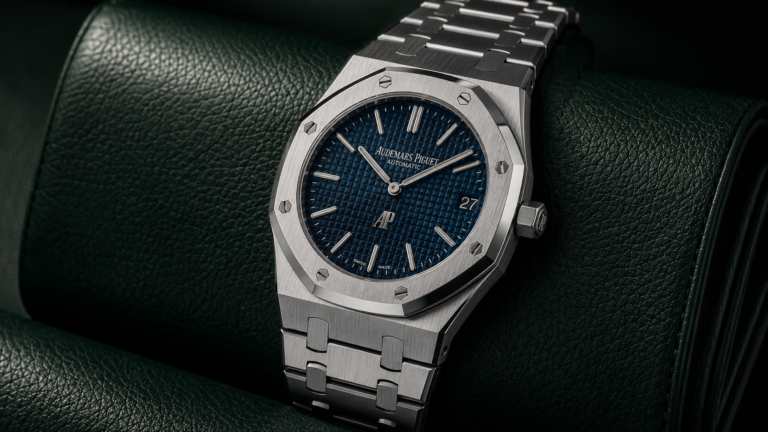
Let me be direct: this watch is a personal favourite, and the investment case is one of the most compelling in this entire list. The Royal Oak Mini Frosted Gold is a 23mm piece in 18-carat gold (yellow, rose, or white), powered by the quartz Calibre 2730 and finished using a hammering technique developed in collaboration with Florentine jeweller Carolina Bucci. The process applies thousands of tiny indentations to the case and bracelet by hand, producing a faceted, light-scattering surface that is completely unique in production watchmaking. The Petite Tapisserie dial, octagonal bezel with eight polished screws, and AP folding clasp deliver the full Royal Oak design language at 23mm, without compromise.
Now the numbers. Retail is approximately £27,000 to £30,000 through AP House. On the secondary market, the same watch trades at £70,000 to £90,000, three to four times retail. For a quartz-movement watch, that premium is almost without precedent and reflects one thing clearly: demand materially exceeds supply, and those who secure the watch at retail are immediately sitting on a position with significant paper gains. The investment analysis is straightforward: 18-carat gold intrinsic value provides a floor, AP’s controlled production of roughly 57,000 watches per year across the entire catalogue provides structural scarcity, and the Royal Oak design heritage removes any question about long-term collector demand.
The only real drawback is the waiting list. Securing a Royal Oak Mini Frosted Gold at retail through AP House on Clifford Street requires a prior purchase relationship and patience measured in years, sometimes longer. That friction is precisely why the secondary market premium exists, and also why buyers who build the relationship now are in a materially better position than those who pay grey market prices today. If you can get it at retail, it is one of the clearest value propositions in women’s watchmaking.
What to Avoid
Heavily jewelled cocktail watches in professional settings. The context mismatch is the problem, not the watch: a diamond-paved dial and gem-set bezel at a 9am investment committee communicate that you are dressed for a different event, and in a room full of people who evaluate judgment for a living, that calibration error is noticed.
Fashion brand watches. At £2,000 to £5,000, watches from fashion houses depreciate 50% to 70% within two years, carry no horological credibility, and communicate that you prioritised badge over substance. The category is wide: any watch whose primary branding belongs to a clothing or accessories house rather than a dedicated watchmaker fails this test.
Oversized men’s references worn as a statement. If the watch does not fit your wrist properly, it communicates discomfort rather than authority. The market for correctly proportioned serious watches for women is deep enough that there is no longer any reason to wear something that does not work on your wrist in order to be taken seriously.
Smartwatches at director level and above in client-facing roles. The Apple Watch is entirely defensible at junior and mid-levels and in tech or startup environments. At director level and above in traditional corporate environments (banking, PE, law, consulting), wearing a smartwatch to a formal client meeting communicates that you either do not know the room or have decided not to care about it. In a context where judgment is the product you are selling, neither reading is useful.
Anything that requires an explanation. If you find yourself rehearsing why you bought it, the signal is already lost.
The Right Watch for Every Occasion and Grade
The mapping below reflects corporate environments broadly: finance, law, consulting, banking, tech at scale, marketing at senior levels. For a deeper analysis of watch signals in the City of London specifically, see What Your Watch Says About You in the City of London.
By Occasion
Board presentation or client pitch: Cartier Tank Louis Cartier in gold (£8,000-plus) or Patek Calatrava Ladies (from £18,000). Clean, calibrated, nothing that invites a glance at your wrist instead of your slides.
Internal meeting or day-to-day office: Rolex Lady-Datejust 28 in Oystersteel (from £5,500) or Cartier Tank Must (from £3,000). Credible, functional, wears without friction.
Business dinner or corporate event: Cartier Panthère in steel or gold (from £5,500) or JLC Reverso One (from £8,500). Both reward a closer look, which is the correct dynamic at a dinner table.
International travel and conference: Rolex Lady-Datejust 28 (wear Rolex everywhere; the brand is a universal language), or the AP Royal Oak Mini Frosted Gold for markets where the Royal Oak is a known reference and the occasion warrants it.
By Career Grade
Junior (Analyst / Associate / Graduate / Executive): Cartier Tank Must in steel (from £3,000) or a pre-owned Cartier Panthère steel (from £3,300). Demonstrates cultural awareness and capital discipline simultaneously. Avoid anything that suggests you are spending ahead of your salary band.
Mid-level (Manager / Senior Manager / VP): Rolex Lady-Datejust 28 (from £5,500) or JLC Reverso One in steel (from £8,500). The step up to Rolex is earned and reads correctly at this level. The Reverso signals horological intelligence for those who want something less obvious.
Senior (Director / Senior Director): Cartier Panthère in gold configurations (from £15,000), Patek Calatrava Ladies (from £18,000), or JLC Reverso One in a gold complication. The range opens considerably; the choice becomes about who you are rather than what level you are signalling.
Leadership (MD / Partner / C-suite): AP Royal Oak Mini Frosted Gold (retail from £27,000; build the AP House relationship now and expect to wait). At this level, the watch reflects identity rather than aspiration, and the Frosted Gold is the watch that earns the room without asking permission. The secondary market at £70,000 to £90,000 says everything about where collector demand places this piece.
The Investment Hierarchy
Ranked from strongest to weakest investment case, using secondary market data tracked on WatchCharts.
The Cartier Panthère leads the list: 31.8% five-year appreciation, 7.5-day median sale time, and a discontinuation-relaunch dynamic that continues to support collector demand for pre-2004 vintage references. The AP Royal Oak Mini Frosted Gold follows with arguably the strongest retail-to-secondary premium on this list: trading at £70,000 to £90,000 against a £27,000 to £30,000 retail price, the watch delivers three to four times retail on the secondary market, driven by genuine scarcity and unmatched demand. The Rolex Lady-Datejust provides the most reliable capital preservation across market cycles, backed by the same structural advantages documented in Rolex as a Store of Value: A Data-Driven Analysis. The Patek Calatrava Ladies sits in the middle tier: a genuine store-of-value position with select references trading 5% to 15% above retail. The JLC Reverso One and Cartier Tank hold value with dignity but are best framed as long-duration carry assets rather than appreciation plays. For the complete framework on how watches fit within a broader alternatives allocation, see Watches as Alternative Assets in 2025: The Complete Investment Guide.
Where to Buy in London
Cartier. Flagship boutique on New Bond Street for Tank and Panthère. Harrods and Sloane Street boutiques carry broader inventory. For the Panthère specifically, New Bond Street is the preferred channel for limited editions and gold configurations.
AP House. Now at 9 Clifford Street, Mayfair (relocated early 2026 from New Bond Street). The Royal Oak Mini Frosted Gold requires an allocation relationship; AP House operates as a private-client environment rather than a walk-in boutique.
Rolex. Watches of Switzerland Old Bond Street flagship, Harrods Fine Watch Room, Bucherer Covent Garden, Mappin & Webb Regent Street. Lady-Datejust walk-in availability is more consistent than sport models.
Patek Philippe. Patek Philippe Salon, 10 Old Bond Street. The only route to a new Calatrava at retail.
JLC. Jaeger-LeCoultre boutique, New Bond Street.
Pre-owned. Watchfinder & Co. is the institutional-grade option for authenticated, warrantied pre-owned across all brands above. Chrono24 provides the deepest global marketplace and the most transparent pricing. For vintage Patek Philippe and specialist Cartier references, Somlo London in the Burlington Arcade carries genuine expertise.
Conclusion: The Asset on Your Wrist
Every watch on this list works in a boardroom and earns its place on a balance sheet. Choose with the same discipline you apply to any capital allocation: right reference, right channel, full documentation, correct career timing. The right watch works for you twice: on your wrist every day, and on your balance sheet when you decide to move on.
DialAndYield.com analyses luxury watches as alternative assets for finance professionals. All prices in GBP are indicative as of Q2 2026, sourced from UK authorised retailers and secondary market data. Secondary market performance data sourced from WatchCharts, Chrono24, and Watchfinder & Co.